 ChipApex | Global Electronic Components Supplier

SEARCH
Search Product
Search Post
— IC芯片 | 连接器 | 传感器 | 被动器件 —
Search productSearch post
— IC芯片 | 连接器 | 传感器 | 被动器件 —
Consult the customer manager about the wholesale price.
consultation hotline:86-132-6715-2157
email:[email protected]
Contact the product manager for consultation. One-stop consultation is available.
Do you want a lower wholesale price? Please send us your inquiry and we will reply immediately.
The NCV431ASNT1G is a low voltage precision adjustable shunt regulator from the TLV431 series, manufactured by onsemi. It features a programmable output voltage range of 1.24 V to 16 V and an initial reference accuracy of ±1.0% at 25 °C. The device operates within an ambient temperature range of -40 °C to 85 °C and supports a cathode current range of 0.1 mA to 20 mA. It exhibits a sharp low current turn-on characteristic with a dynamic output impedance of 0.25 Ω typical. The component is housed in a TSOP-5 package and is AEC-Q100 qualified.
Verify that the ordering suffix matches the required package type, as the NCV prefix specifically indicates the TSOP-5 package configuration. Confirm automotive qualification requirements are met through the NCV designation, which denotes AEC-Q100 qualification and PPAP capability. Ensure the selected variant aligns with the specific accuracy grade needed for the application design.
Select this component when a precision reference with a wide programmable voltage range is required in a compact surface-mount form factor. The NCV prefix ensures suitability for automotive environments due to its extended temperature range and qualification standards. Consider the ±1.0% tolerance if higher precision is not strictly necessary, as other series variants offer tighter tolerances.
This part belongs to the TLV431 family of programmable shunt regulators, designed as high-performance alternatives to standard Zener diodes. The NCV prefix distinguishes it as an automotive-grade device, meeting specific site and control change requirements. It shares functional similarities with the SCV431 series but utilizes a different package style optimized for specific board space constraints.
TLV431ASNT1G
The maximum cathode-to-anode voltage (VKA) is rated at 18 V under full operating ambient temperature conditions.
Yes, when used in feedback loops such as in isolated switching power supplies, external capacitors are typically required for loop compensation to ensure stability.
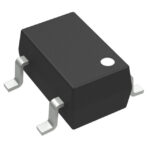 NCV431ASNT1G

The activity of extra discounts on wholesale prices is in full swing…
Please fill in your contact information and we will send you the latest wholesale price list.





