 ChipApex | Global Electronic Components Supplier
SEARCH
Search Product
Search Post
— IC芯片 | 连接器 | 传感器 | 被动器件 —
Search productSearch post
— IC芯片 | 连接器 | 传感器 | 被动器件 —
Consult the customer manager about the wholesale price.
consultation hotline:86-132-6715-2157
email:[email protected]
Contact the product manager for consultation. One-stop consultation is available.
Do you want a lower wholesale price? Please send us your inquiry and we will reply immediately.
The NCV7702BDWR2G is a dual full-bridge driver IC designed for 14 V automotive stepper and DC motor applications. It features four half-bridge outputs configured as two independent H-bridges, capable of delivering up to 1 A per bridge. The device operates within a supply voltage range of 7 V to 16 V and supports bipolar stepper motors and brushed DC motors. It is qualified to AEC-Q100 standards for automotive reliability and functions across an extended temperature range from -40°C to +150°C.
Verify the complete part number including suffixes such as 'DWR2G' to ensure correct packaging and lead times. Confirm AEC-Q100 compliance requirements match your specific automotive application standards. Check for RoHS and halogen-free status if required by your manufacturing process. Ensure compatibility with your system's voltage levels and thermal management capabilities before ordering.
Select this component when driving bipolar stepper motors or dual brushed DC loads in automotive environments requiring high current capability. Compare against single H-bridge alternatives if only one motor channel is needed. Consider thermal performance under continuous load conditions. Verify interface compatibility with your microcontroller or driver logic levels. Evaluate package size constraints relative to the SO-24L footprint.
This device belongs to onsemi's automotive motor driver family, specifically engineered for low-voltage DC and stepper motor applications. It complements other solutions like the NCV7708 series which may offer different channel counts or integrated features. The NCV7702BDWR2G focuses on robust dual-channel performance suitable for safety-critical automotive functions.
Direct substitutes include other dual H-bridge automotive drivers from onsemi or competitors offering similar 1A per bridge specifications. Verify pinout compatibility and electrical parameters such as supply voltage range and output current before substitution. Cross-reference thermal resistance values to ensure adequate heat dissipation in the target design.
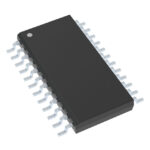 NCV7702BDWR2G
The activity of extra discounts on wholesale prices is in full swing…
Please fill in your contact information and we will send you the latest wholesale price list.





