 ChipApex | Global Electronic Components Supplier
SEARCH
Search Product
Search Post
— IC芯片 | 连接器 | 传感器 | 被动器件 —
Search productSearch post
— IC芯片 | 连接器 | 传感器 | 被动器件 —
Consult the customer manager about the wholesale price.
consultation hotline:86-132-6715-2157
email:[email protected]
Contact the product manager for consultation. One-stop consultation is available.
Do you want a lower wholesale price? Please send us your inquiry and we will reply immediately.
The NCV7705DQAR2G is a mirror-module driver IC manufactured by onsemi, designed for automotive side-view mirror applications. It integrates control functions for mirror positioning, heating, and folding mechanisms within a single integrated circuit. The device operates with a supply voltage range of 3.15 V to 5.25 V and utilizes an SSOP-36 package with an exposed pad for thermal management. It supports SPI communication for configuration and status monitoring, ensuring reliable operation in automotive environments across the specified temperature range.
Verify the exact package type and marking code against the official datasheet before procurement. Confirm that the SSOP-36 variant matches the design requirements. Ensure compatibility with the vehicle's SPI bus protocol and voltage levels. Check for any specific ordering suffixes that may indicate different tape-and-reel quantities or packaging options. Validate the component's AEC-Q100 qualification status if required by the application specification.
Select this component when a single IC solution is needed for comprehensive mirror module control. It is suitable for designs requiring integrated motor drive, heating control, and folding functionality. Consider the SSOP-36 package size constraints and thermal dissipation needs. Verify that the SPI interface aligns with the host microcontroller's capabilities. Evaluate the power supply requirements to ensure they fall within the 3.15 V to 5.25 V operating range.
The NCV7705DQAR2G belongs to onsemi's portfolio of automotive body control ICs. It is part of a family of solutions designed to simplify the implementation of complex mirror modules. This component addresses the trend toward integrated electronics in automotive mirrors, reducing board space and assembly complexity. It complements other onsemi products like the NCV7706 and NCV7710 in broader body control architectures.
Check for direct pin-to-pin replacements such as the NCV7706DQAR2G if feature parity is required. Verify functional equivalence regarding motor drive capabilities and heating control outputs. Ensure that any substitute component meets the same automotive reliability standards and package dimensions. Consult the manufacturer's substitution guide for approved alternatives.
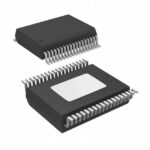 NCV7705DQAR2G
The activity of extra discounts on wholesale prices is in full swing…
Please fill in your contact information and we will send you the latest wholesale price list.





