ChipApex | Global Electronic Components Supplier
SEARCH
Search Product
Search Post
— IC芯片 | 连接器 | 传感器 | 被动器件 —
Search productSearch post
— IC芯片 | 连接器 | 传感器 | 被动器件 —
Consult the customer manager about the wholesale price.
consultation hotline:86-132-6715-2157
email:[email protected]
Contact the product manager for consultation. One-stop consultation is available.
Do you want a lower wholesale price? Please send us your inquiry and we will reply immediately.
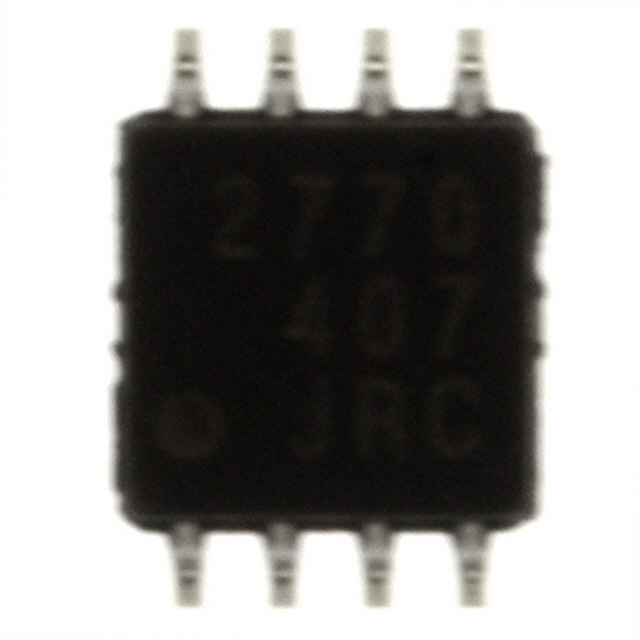
The NJM2770RB1-TE1 is a high-power, low-voltage audio power amplifier manufactured by Nisshinbo Micro Devices. It features a differential output design that eliminates the need for external coupling capacitors. The device operates within a supply voltage range of 2V to 4.5V and delivers typical output powers of 250mW at 3V into an 8Ω load, or 400mW at 4.5V into a 16Ω load. It includes a standby function with a typical current consumption of only 0.1µA. The component utilizes bipolar technology and is housed in an MSOP8 (TVSP8) package.
Verify the specific ordering suffix RB1 corresponds to the TVSP8 package variant when sourcing. Confirm RoHS compliance status through official manufacturer documentation prior to integration. Ensure input signals remain within the specified common-mode voltage limits to prevent distortion. Validate that the PCB layout supports the required thermal dissipation for the MSOP8 package under maximum load conditions.
Select this component for applications requiring high efficiency and minimal external passive components. The differential output simplifies board space constraints compared to single-ended designs. Consider the gain adjustment capabilities via external resistors for impedance matching. Evaluate the operating temperature range to ensure suitability for the intended environmental conditions.
This part belongs to the NJM2770 series of audio power amplifiers designed for low-voltage operation. The series is characterized by its ability to deliver significant power output from small supply voltages. The RB1 suffix typically denotes a specific package variation within the product line, distinguishing it from standard VSP8 variants.
Direct substitutes are not explicitly listed in the provided datasheet. Verify pin compatibility and electrical specifications if considering alternative manufacturers' mono audio amplifiers with similar voltage ranges and output power capabilities.
Standby mode is activated by pulling the Chip Disable (CD) terminal to a low level, specifically below 0.8V.
The differential output allows the amplifier to drive the load without requiring external coupling capacitors, reducing component count and board space.
 NJM2770RB1-TE1
The activity of extra discounts on wholesale prices is in full swing…
Please fill in your contact information and we will send you the latest wholesale price list.