 ChipApex | Global Electronic Components Supplier
SEARCH
Search Product
Search Post
— IC芯片 | 连接器 | 传感器 | 被动器件 —
Search productSearch post
— IC芯片 | 连接器 | 传感器 | 被动器件 —
Consult the customer manager about the wholesale price.
consultation hotline:86-132-6715-2157
email:[email protected]
Contact the product manager for consultation. One-stop consultation is available.
Do you want a lower wholesale price? Please send us your inquiry and we will reply immediately.
The NJM386BM-TE2 is a single-channel mono Class-AB audio amplifier manufactured by Nisshinbo Micro Devices. It operates within a supply voltage range of 4 V to 18 V and delivers an output power of 1 W into a 32 Ohm load. The device features a total harmonic distortion plus noise (THD+N) of 0.1%, a gain of 46 dB, and an input bias current of 100 nA. It draws a working supply current of 5 mA and supports single-ended input. The component is housed in a DMP-8 surface-mount package and functions reliably across an operating temperature range of -40°C to +85°C.
This component is designated as a discontinued product by the manufacturer. Production will cease in the near term, and availability is restricted to existing customers with a limited time frame. It is not approved for new project designs. Engineers must verify current stock status and lead times through authorized distributors immediately. Alternative solutions should be evaluated for any future development cycles to ensure long-term supply chain stability.
Select this part only if the design requires a single-channel mono Class-AB amplifier with a 1 W output capability at 32 Ohms. Verify that the system supply voltage remains between 4 V and 18 V. The DMP-8 surface-mount package must fit the PCB layout constraints. Due to its discontinued status, this component is suitable solely for maintenance or replacement of existing hardware, not for new product introductions.
The NJM386B series represents a line of low-voltage audio amplifiers from Nisshinbo Micro Devices. The NJM386BM-TE2 variant specifically denotes the tape-and-reel packaging configuration within the DMP-8 footprint. This series is engineered for applications demanding moderate power output with high efficiency in compact form factors, serving as a bridge between low-power operational amplifiers and higher-power discrete audio stages.
The NJM386M-TE1 is listed as a potential substitute. Note that it offers lower output power (500 mW), operates at a maximum voltage of 12 V, and uses differential inputs. Designers must assess compatibility regarding power requirements, input signal types, and voltage headroom before substitution.
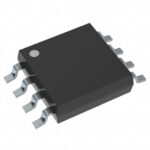 NJM386BM-TE2
The activity of extra discounts on wholesale prices is in full swing…
Please fill in your contact information and we will send you the latest wholesale price list.





