 ChipApex | Global Electronic Components Supplier

SEARCH
Search Product
Search Post
— IC芯片 | 连接器 | 传感器 | 被动器件 —
Search productSearch post
— IC芯片 | 连接器 | 传感器 | 被动器件 —
Consult the customer manager about the wholesale price.
consultation hotline:86-132-6715-2157
email:[email protected]
Contact the product manager for consultation. One-stop consultation is available.
Do you want a lower wholesale price? Please send us your inquiry and we will reply immediately.
The NL17SG86DFT2G is a single high-speed XOR gate manufactured by onsemi. It operates within a supply voltage range of 1.65V to 3.6V, ensuring compatibility with low-voltage digital systems. The device features a propagation delay of typically 0.9ns at 3.3V, supporting data rates up to 400Mbps. It utilizes a 5-pin SOT-563 package, providing a compact footprint for space-constrained designs. The component is designed for applications requiring fast switching speeds and low power consumption in portable electronics.
Verify the specific suffix DFT2G against official onsemi documentation to confirm tape-and-reel quantity and packaging specifications. Ensure the ordering part number matches the exact voltage and package requirements for your design. Cross-reference the datasheet revision date to guarantee access to the most current electrical characteristics and mechanical drawings before finalizing procurement.
Select this component when a single XOR function is required in ultra-low voltage environments. The SOT-563 package offers a smaller solution size compared to traditional SOIC options. Consider the propagation delay specifications relative to your system clock speed to ensure timing margins are met. Evaluate power consumption requirements against the device's quiescent current ratings for battery-operated applications.
This component belongs to onsemi's NL17SG series of single-gate logic devices. The series focuses on providing high performance in minimal physical space. These gates are engineered for use in mobile phones, PDAs, and other handheld devices where power efficiency and board real estate are critical constraints. The technology leverages advanced CMOS processes to achieve speed and low power simultaneously.
Check for direct pin-compatible alternatives within the same family, such as other NL17SG variants with different gate counts or functions. Verify that any substitute maintains the same 1.65V to 3.6V operating range and SOT-563 package dimensions. Ensure the replacement part meets the same propagation delay and power dissipation requirements specified in the original design.
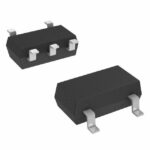 NL17SG86DFT2G

The activity of extra discounts on wholesale prices is in full swing…
Please fill in your contact information and we will send you the latest wholesale price list.





