 ChipApex | Global Electronic Components Supplier

SEARCH
Search Product
Search Post
— IC芯片 | 连接器 | 传感器 | 被动器件 —
Search productSearch post
— IC芯片 | 连接器 | 传感器 | 被动器件 —
Consult the customer manager about the wholesale price.
consultation hotline:86-132-6715-2157
email:[email protected]
Contact the product manager for consultation. One-stop consultation is available.
Do you want a lower wholesale price? Please send us your inquiry and we will reply immediately.
The NL27WZU04DTT1 is a dual unbuffered inverter from the NL27WZ series, manufactured by onsemi. It operates within a supply voltage range of 1.65 V to 5.5 V and utilizes CMOS logic technology. The device features high-impedance TTL-compatible inputs that reduce current loading on input drivers, while its outputs are designed for balanced sourcing and sinking capabilities. Packaged in a compact TSOP-6 surface-mount configuration, it supports an operating temperature range from -55 °C to +125 °C. Key electrical characteristics include a maximum propagation delay of 11 ns at 15 pF load, with output currents rated at ±32 mA.
Verify the exact suffix designation, as official documentation typically lists NL27WZU04DTT1G. Confirm RoHS compliance status and lead times directly with onsemi or authorized distributors. Ensure the procurement channel provides valid traceability for automotive or industrial grade requirements. Check for end-of-life notices or alternative package options if the specific TSOP-6 variant is discontinued.
Select this component when unbuffered inversion is required for minimal capacitance loading. The wide voltage range allows compatibility with both 1.8 V and 5 V systems. Consider the TSOP-6 package for space-constrained PCB layouts. Verify input compatibility with driving sources to ensure proper logic level translation across the full temperature range.
This part belongs to the NL27WZ family of high-speed CMOS logic devices. The 'U' designation indicates an unbuffered version, distinguishing it from buffered variants like the NL27WZ04. It serves as a cost-effective solution for basic logic inversion tasks where signal integrity does not require buffering. The family is known for low static power consumption and robust noise immunity.
NL27WZ04DTT1G: Buffered dual inverter with similar electrical characteristics but different output structure. NL27WZU04DFT2G: Unbuffered dual inverter in SC-70-6 package. NC7W04: Legacy equivalent with comparable functionality but potentially different performance metrics.
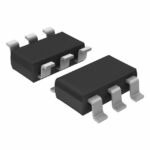 NL27WZU04DTT1

The activity of extra discounts on wholesale prices is in full swing…
Please fill in your contact information and we will send you the latest wholesale price list.




