 ChipApex | Global Electronic Components Supplier

SEARCH
Search Product
Search Post
— IC芯片 | 连接器 | 传感器 | 被动器件 —
Search productSearch post
— IC芯片 | 连接器 | 传感器 | 被动器件 —
Consult the customer manager about the wholesale price.
consultation hotline:86-132-6715-2157
email:[email protected]
Contact the product manager for consultation. One-stop consultation is available.
Do you want a lower wholesale price? Please send us your inquiry and we will reply immediately.
The NLAS4501DTT1 is a single-pole double-throw (SPDT) analog switch manufactured by onsemi. It operates from a single supply voltage ranging from 2.7 V to 5.5 V, making it suitable for low-voltage digital and analog signal routing applications. The device features a very low on-resistance of 3.5 Ω at 5 V, ensuring minimal signal attenuation. It supports bidirectional signal flow with negligible leakage current in the off state. The component is housed in an ultra-small SC-70-6 surface-mount package, designed for space-constrained portable electronics.
Verify the specific ordering suffix against the manufacturer's official datasheet to confirm packaging type and tape-and-reel specifications. Ensure the requested variant matches the required operating temperature range and pin configuration. Cross-reference the manufacturer part number with authorized distributor databases to confirm active status and availability before finalizing procurement plans.
Select this component when a single-channel analog switch is required for low-voltage single-supply applications. Consider the 3.5 Ω on-resistance and bandwidth characteristics relative to the signal frequency requirements. Evaluate the SC-70-6 package dimensions against available PCB real estate. Compare leakage current specifications if signal isolation in the off-state is critical for the specific application environment.
This component belongs to onsemi's NLAS series of low-voltage analog switches. These devices are engineered for portable applications where power consumption and physical size are primary constraints. The series typically includes single, dual, and quad configurations sharing similar electrical characteristics and packaging options to simplify design processes across different product lines.
Potential substitutes include the NLAS4599DTT1 or MAX4599, which offer similar SPDT functionality and low-voltage operation. Verify that alternative components match the required on-resistance, supply voltage range, and package dimensions. Confirm compatibility with existing control logic levels and signal bandwidth requirements before implementing any cross-brand replacements.
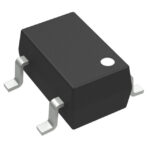 NLAS4501DTT1

The activity of extra discounts on wholesale prices is in full swing…
Please fill in your contact information and we will send you the latest wholesale price list.





