ChipApex | Global Electronic Components Supplier

SEARCH
Search Product
Search Post
— IC芯片 | 连接器 | 传感器 | 被动器件 —
Search productSearch post
— IC芯片 | 连接器 | 传感器 | 被动器件 —
Consult the customer manager about the wholesale price.
consultation hotline:86-132-6715-2157
email:[email protected]
Contact the product manager for consultation. One-stop consultation is available.
Do you want a lower wholesale price? Please send us your inquiry and we will reply immediately.
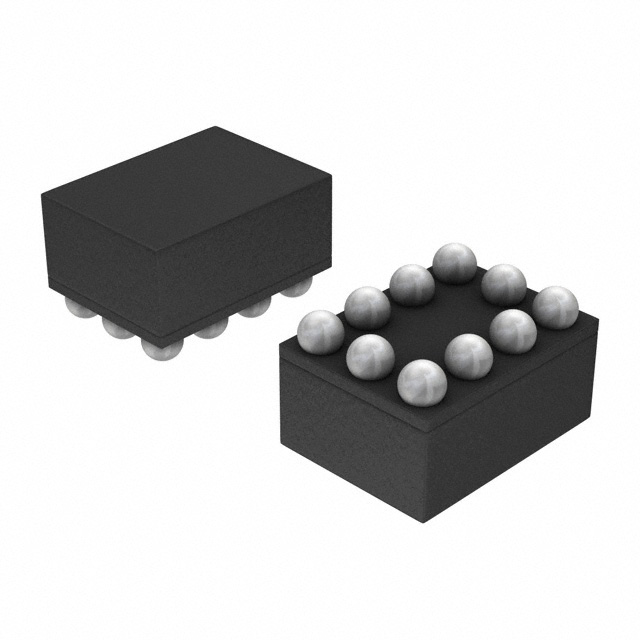
The NLAS4684FCT1G is a dual single-pole double-throw (SPDT) analog switch manufactured by onsemi. It integrates two independent switching circuits within a compact 10-MicroBump package. The device operates with a single supply voltage ranging from 1.8V to 5.5V, ensuring compatibility with various logic families. Key electrical specifications include a maximum on-resistance of 800 milliohms and a channel-to-channel matching of 60 milliohms. The component features a -3dB bandwidth of 9.5MHz, charge injection of 15pC, and a maximum leakage current of 1µA. Switching times are limited to 30ns for both turn-on and turn-off phases.
This component has reached end-of-life status and is no longer in active manufacturing. Verification of availability should focus on surplus distributors or secondary market sources rather than direct manufacturer allocation. Engineers must confirm the authenticity of stock through authorized channels due to the discontinued nature of the part. Replacement strategies should be evaluated immediately to ensure long-term supply chain stability for production systems.
Designers should consider the specific package constraints of the 10-MicroBump format during layout planning. The 800 milliohm on-resistance limit must be validated against the application's signal integrity requirements. Voltage headroom between the supply rail and signal levels should be analyzed to prevent distortion. Thermal management considerations remain relevant despite the low power consumption typical of analog switches in this class.
The NLAS4684FCT1G belongs to the NLAS4684 family of analog switches. This series is designed for high-density applications where small form factors are critical. The MicroBump packaging technology allows for reduced board space usage compared to traditional surface-mount packages. The device represents a solution for integrating multiple switching functions into compact portable electronic designs.
onsemi recommends the NLAS5223MNR2G as a replacement for this discontinued component. Designers should verify pinout compatibility and electrical parameter alignment before implementing any substitute parts in existing circuit designs.
 NLAS4684FCT1G

The activity of extra discounts on wholesale prices is in full swing…
Please fill in your contact information and we will send you the latest wholesale price list.