 ChipApex | Global Electronic Components Supplier

SEARCH
Search Product
Search Post
— IC芯片 | 连接器 | 传感器 | 被动器件 —
Search productSearch post
— IC芯片 | 连接器 | 传感器 | 被动器件 —
Consult the customer manager about the wholesale price.
consultation hotline:86-132-6715-2157
email:[email protected]
Contact the product manager for consultation. One-stop consultation is available.
Do you want a lower wholesale price? Please send us your inquiry and we will reply immediately.
The NLAS4684MR2G is a dual single-pole double-throw (SPDT) analog switch manufactured by onsemi. It features an ultra-low on-resistance of 800 mΩ maximum and operates with a single supply voltage ranging from 1.8 V to 5.5 V. The device provides a -3 dB bandwidth of 9.5 MHz, ensuring signal integrity in high-frequency applications. Key electrical parameters include a charge injection of 15 pC, a maximum leakage current of 1 µA, and channel-to-channel matching of 60 mΩ. Switching times are limited to 30 ns for both turn-on and turn-off. The component is housed in a 10-TFSOP package and supports an operating temperature range from -55°C to 125°C.
Verify the exact suffix of the part number before ordering, as the provided model lacks the standard trailing characters found in official datasheets. Confirm availability status, as this specific series may be subject to end-of-life notices or discontinuation. Ensure the procurement source provides valid RoHS compliance documentation and material declarations consistent with onsemi standards.
Select this component when low voltage operation below 3.3 V is required alongside minimal signal attenuation. The 800 mΩ on-resistance makes it suitable for precision analog signal routing where power efficiency is critical. Consider the 10-pin TFSOP package dimensions for PCB layout constraints and verify that the 1.8 V minimum supply voltage aligns with the system's power rails.
This device belongs to the NLAS4684 family of ultra-low resistance analog switches. It shares functional similarities with the NLAS4685 but offers specific performance optimizations for low-voltage digital and analog applications. The product line is designed to meet JEDEC latchup test specifications, ensuring reliability in mixed-signal environments common in consumer electronics and telecommunications equipment.
The NLAS4684MR2G is listed as obsolete. Potential substitutes include the SGM3005, SGM2267, SGM2268, and NS5A4684SMNTBG. Verify pin compatibility and electrical parameter alignment, particularly on-resistance and supply voltage ranges, before implementing any alternative component.
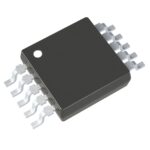 NLAS4684MR2

The activity of extra discounts on wholesale prices is in full swing…
Please fill in your contact information and we will send you the latest wholesale price list.





