 ChipApex | Global Electronic Components Supplier

SEARCH
Search Product
Search Post
— IC芯片 | 连接器 | 传感器 | 被动器件 —
Search productSearch post
— IC芯片 | 连接器 | 传感器 | 被动器件 —
Consult the customer manager about the wholesale price.
consultation hotline:86-132-6715-2157
email:[email protected]
Contact the product manager for consultation. One-stop consultation is available.
Do you want a lower wholesale price? Please send us your inquiry and we will reply immediately.
The NLSF308MNR2 is a high-speed CMOS quad 2-input AND gate manufactured by onsemi. It features four independent logic channels within a single package, designed for efficient signal processing in digital circuits. The device utilizes silicon gate CMOS technology to achieve high switching speeds while maintaining low power consumption. Key electrical characteristics include a maximum quiescent current of 2 µA and output drive capabilities of 8 mA for both high and low states. Logic thresholds are defined with a maximum low-level input voltage of 0.5 V and a minimum high-level input voltage of 1.5 V, ensuring reliable operation across various digital interfaces.
Verify the specific suffix designation when ordering, as it determines the tape and reel packaging format required for automated assembly processes. Confirm that the component meets all relevant environmental compliance standards applicable to your target market. Ensure compatibility with standard surface-mount reflow soldering profiles during the manufacturing integration phase to maintain device integrity.
Select this component when a design requires multiple independent AND logic functions within a limited board area. The low static power draw makes it suitable for battery-operated devices where efficiency is critical. Verify that the input voltage levels align with the driving source logic family to ensure proper threshold recognition and noise margin stability during operation.
This part belongs to onsemi's portfolio of advanced CMOS logic gates, which are fundamental building blocks for complex digital systems. These components are widely used in applications requiring precise logical operations with minimal power overhead. The series supports various packaging options to accommodate different assembly requirements and space constraints in modern electronic hardware designs.
Check for equivalent quad 2-input AND gates from other manufacturers if supply constraints exist. Ensure any substitute maintains compatible pinout configurations and electrical specifications to avoid redesign efforts. Verify that alternative parts meet the same speed and power performance criteria required by the original circuit design.
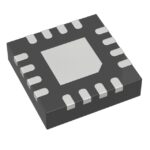 NLSF308MNR2

The activity of extra discounts on wholesale prices is in full swing…
Please fill in your contact information and we will send you the latest wholesale price list.





