 ChipApex | Global Electronic Components Supplier

SEARCH
Search Product
Search Post
— IC芯片 | 连接器 | 传感器 | 被动器件 —
Search productSearch post
— IC芯片 | 连接器 | 传感器 | 被动器件 —
Consult the customer manager about the wholesale price.
consultation hotline:86-132-6715-2157
email:[email protected]
Contact the product manager for consultation. One-stop consultation is available.
Do you want a lower wholesale price? Please send us your inquiry and we will reply immediately.
The NLV74HCT14ADTR2G is a hex inverter integrated circuit manufactured by onsemi, belonging to the 74HCT logic family. It features six independent Schmitt trigger inverters designed for high-speed CMOS applications. The device operates within a supply voltage range of 4.5 V to 5.5 V and utilizes a 14-pin TSSOP surface-mount package. It supports industrial temperature ranges from -55°C to +125°C. The component ensures noise immunity through Schmitt trigger inputs and provides standard single-ended outputs compatible with LSTTL logic levels.
Verify the specific ordering suffix 'DTR2G' to confirm the tape-and-reel packaging format and lead-free composition. Ensure the part number matches the NLV prefix variant if automotive or extended reliability specifications are required, as this distinguishes it from standard commercial grade devices. Cross-reference the manufacturer's latest datasheet for any pinout revisions or updated electrical characteristics before finalizing procurement.
Select this component when designing systems that require robust noise immunity due to its Schmitt trigger inputs. It is suitable for applications needing interface between 5V CMOS and LSTTL standards. Consider the TSSOP-14 package constraints for PCB layout. Verify that the operating temperature range meets the environmental requirements of the target application, particularly for industrial settings.
This component is part of onsemi's extensive portfolio of 74-series logic ICs, specifically the HCT (High-speed CMOS Technology compatible with TTL) family. The NLV prefix typically indicates a variant optimized for automotive or broader industrial reliability standards compared to standard commercial parts. It serves as a fundamental building block for digital logic inversion within complex integrated circuits.
Direct substitutes include MC74HCT14ADTR2G and MC74VHCT14ADTR2G, though voltage and speed specifications may differ. Generic equivalents such as SN74HCT14 or CD74HCT14 offer functional parity but require verification of package dimensions and electrical tolerances against the original design specifications.
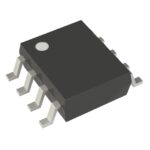 NLV74HCT14ADTR2G

The activity of extra discounts on wholesale prices is in full swing…
Please fill in your contact information and we will send you the latest wholesale price list.





