 ChipApex | Global Electronic Components Supplier

SEARCH
Search Product
Search Post
— IC芯片 | 连接器 | 传感器 | 被动器件 —
Search productSearch post
— IC芯片 | 连接器 | 传感器 | 被动器件 —
Consult the customer manager about the wholesale price.
consultation hotline:86-132-6715-2157
email:[email protected]
Contact the product manager for consultation. One-stop consultation is available.
Do you want a lower wholesale price? Please send us your inquiry and we will reply immediately.
The NLX2G14AMUTCG is a dual Schmitt-trigger inverter manufactured by onsemi, belonging to the NLX2G series of MiniGate logic ICs. It utilizes advanced high-speed CMOS technology within an ultra-small footprint package. The device operates with a supply voltage range from 1.65 V to 5.5 V and features low static current consumption of 1 uA. It supports output drive currents of -32 mA (high) and 32 mA (low). The component is qualified under AEC-Q100 standards for automotive applications and functions reliably across an extended temperature range of -55°C to +125°C.
Verify component authenticity through authorized distributors or direct manufacturer channels due to potential counterfeits. Confirm RoHS compliance status via official datasheets before integration. Check for end-of-life notices as availability may be restricted. Ensure storage conditions meet moisture sensitivity level requirements to prevent package damage during soldering processes.
Select this component when hysteresis is required to prevent oscillation in slow-rising signals. Compare against standard inverters if noise immunity is critical. Consider the NLX2G16AMUTCG if non-inverting buffering is needed instead. Evaluate package size constraints against available alternatives in the same series. Verify voltage compatibility with both input sources and downstream loads.
This part belongs to onsemi's NLX2G family of miniaturized logic devices designed for space-constrained portable electronics and automotive systems. The series emphasizes low power consumption and high speed within tiny packages like UDFN. These components serve as fundamental building blocks for digital logic functions where area efficiency and robustness are prioritized over complex functionality.
Check for active equivalents in the NLX2G series such as NLX2G16AMUTCG for non-inverting needs. Verify pinout compatibility with alternative manufacturers' Schmitt trigger inverters. Ensure electrical parameters match specific application requirements before substitution.
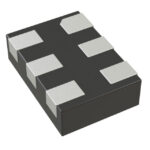 NLX2G14AMUTCG

The activity of extra discounts on wholesale prices is in full swing…
Please fill in your contact information and we will send you the latest wholesale price list.





