 ChipApex | Global Electronic Components Supplier
SEARCH
Search Product
Search Post
— IC芯片 | 连接器 | 传感器 | 被动器件 —
Search productSearch post
— IC芯片 | 连接器 | 传感器 | 被动器件 —
Consult the customer manager about the wholesale price.
consultation hotline:86-132-6715-2157
email:[email protected]
Contact the product manager for consultation. One-stop consultation is available.
Do you want a lower wholesale price? Please send us your inquiry and we will reply immediately.
The NRVUB1620CTRT4G is an ultrafast rectifier manufactured by onsemi, featuring a dual common anode configuration within a D2PAK (TO-263) surface-mount package. It supports a repetitive reverse voltage of 200V and provides an average forward current of 8A per leg, totaling 16A per package. The device exhibits an ultrafast reverse recovery time of 35ns with soft recovery characteristics to minimize switching noise. It operates over a junction temperature range of -65°C to +175°C and includes high-temperature glass passivated junctions for reliability.
Verify the specific ordering suffix 'TRT4G' against official onsemi documentation to confirm tape-and-reel packaging and automotive qualification status. Ensure the component meets AEC-Q101 standards and PPAP capability requirements if intended for automotive assembly lines. Cross-reference the manufacturer part number with the latest datasheet revision to validate mechanical dimensions and marking diagrams before finalizing procurement orders.
Select this component for designs requiring fast switching speeds and low reverse recovery charge in high-temperature environments. The dual common anode topology simplifies circuit layout for bridge rectifiers or synchronous rectification schemes. Verify that the thermal management solution accommodates the D2PAK package's heat dissipation capabilities under maximum load conditions to maintain junction temperatures within the specified operational limits.
This device belongs to the NRVUB series, which represents ultrafast rectifiers designed for demanding power conversion applications. The prefix 'NRVU' indicates specific site and control change requirements, often associated with automotive-grade manufacturing processes. It serves as a complement to the MUR1620CT common cathode device, enabling flexible bridge configurations in high-efficiency power supply designs.
The MURB1620CTRG is documented as a complementary common cathode device. Direct substitution requires verifying pinout compatibility and ensuring the replacement matches the required reverse voltage and current ratings for the specific application context.
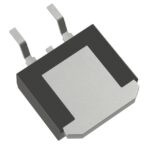 NRVUB1620CTRT4G
The activity of extra discounts on wholesale prices is in full swing…
Please fill in your contact information and we will send you the latest wholesale price list.





