 ChipApex | Global Electronic Components Supplier
SEARCH
Search Product
Search Post
— IC芯片 | 连接器 | 传感器 | 被动器件 —
Search productSearch post
— IC芯片 | 连接器 | 传感器 | 被动器件 —
Consult the customer manager about the wholesale price.
consultation hotline:86-132-6715-2157
email:[email protected]
Contact the product manager for consultation. One-stop consultation is available.
Do you want a lower wholesale price? Please send us your inquiry and we will reply immediately.
The NS16C2752TVSX/NOPB is a dual universal asynchronous receiver/transmitter (UART) integrated circuit manufactured by Texas Instruments. It features two independent UART channels, each equipped with a 64-byte transmit and receive FIFO buffer to enhance data throughput and reduce CPU overhead. The device supports data rates up to 5 Mb/s and operates within a supply voltage range of 2.97 V to 5.5 V. It is housed in a 48-lead TQFP package suitable for surface-mount applications. The component functions across an industrial temperature range from -40°C to +85°C and draws a typical operating current of 3 mA.
Verify the specific suffix 'X' against official Texas Instruments documentation to confirm tape-and-reel packaging specifications. Ensure the NOPB designation confirms lead-free and RoHS compliance status as per current manufacturing standards. Cross-reference the full part number with authorized distributors to validate active status and availability constraints before procurement.
Select this component when dual independent UART channels with substantial FIFO buffering are required. The wide voltage range allows flexibility in power supply design. Consider the TQFP-48 package dimensions for PCB layout constraints. Verify that the 5 Mb/s maximum data rate meets system timing requirements and that the operating temperature range aligns with the environmental conditions of the target application.
This device belongs to the NS16C2752 family of dual UART controllers. It serves as a successor or variant to earlier single-channel UARTs, offering increased integration. The 'NOPB' suffix indicates non-plastic body or lead-free processing depending on specific TI nomenclature updates. It is designed for applications replacing legacy 16C550/552A equivalents with enhanced FIFO capabilities.
Direct pin-compatible replacements may include other 16C2752 variants from Texas Instruments or compatible devices from other manufacturers offering dual UART functionality with similar FIFO sizes. Verify electrical characteristics and register compatibility before substitution.
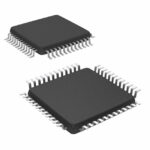 NS16C2752TVSX/NOPB
The activity of extra discounts on wholesale prices is in full swing…
Please fill in your contact information and we will send you the latest wholesale price list.





