ChipApex | Global Electronic Components Supplier
SEARCH
Search Product
Search Post
— IC芯片 | 连接器 | 传感器 | 被动器件 —
Search productSearch post
— IC芯片 | 连接器 | 传感器 | 被动器件 —
Consult the customer manager about the wholesale price.
consultation hotline:86-132-6715-2157
email:[email protected]
Contact the product manager for consultation. One-stop consultation is available.
Do you want a lower wholesale price? Please send us your inquiry and we will reply immediately.
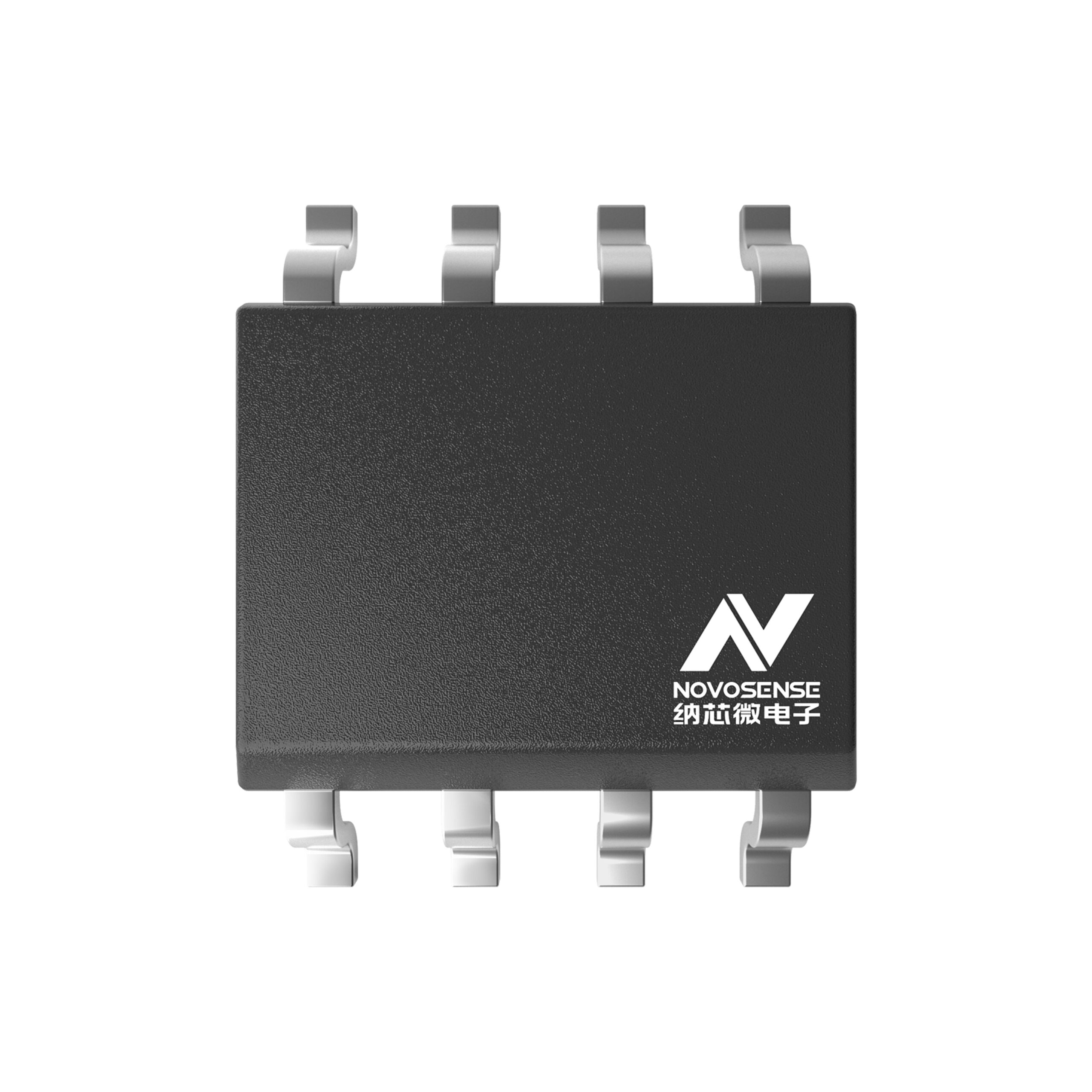
The NSD7310-Q1HSPR is an automotive-grade single H-bridge brushed DC motor driver designed for applications requiring bidirectional control. It operates within a wide supply voltage range of 5V to 36V and delivers a peak current of 3.6A with a typical on-resistance of 520mΩ (HS+LS). The device features PWM control interface, integrated current chopping regulation, and comprehensive protection mechanisms including UVLO, OCP, and TSD. Qualified under AEC-Q100 standards, it utilizes an 8-pin HSOP package with exposed pad for efficient thermal management.
Verify the specific suffix 'HSPR' against official Novosense documentation to confirm tape-and-reel packaging specifications. Ensure the selected variant matches the required temperature grade and pinout configuration for your PCB layout. Cross-reference the datasheet revision date to guarantee compatibility with your design's electrical constraints and safety requirements.
Select this component for designs requiring robust H-bridge control in space-constrained environments. The low on-resistance minimizes conduction losses, while the integrated current sensing capability reduces external BOM costs. Consider the operating temperature range and thermal dissipation capabilities when designing the heat sink or PCB copper area for continuous load conditions.
This part belongs to the NSD731x series of brushed DC motor drivers from Novosense. The series includes industrial variants like NSD7310 and automotive-qualified versions such as NSD7312-Q1. These chips are engineered to provide reliable motor control solutions for both consumer electronics and stringent automotive applications, emphasizing efficiency and system-level protection.
Direct substitutes include other NSD731x family members like NSD7312-Q1HSPR, provided pin compatibility and current ratings align with the design requirements. Verify that any replacement maintains the same H-bridge topology and protection feature set to ensure functional equivalence without redesigning the peripheral circuitry.
 NSD7310-Q1HSPR
The activity of extra discounts on wholesale prices is in full swing…
Please fill in your contact information and we will send you the latest wholesale price list.