ChipApex | Global Electronic Components Supplier
SEARCH
Search Product
Search Post
— IC芯片 | 连接器 | 传感器 | 被动器件 —
Search productSearch post
— IC芯片 | 连接器 | 传感器 | 被动器件 —
Consult the customer manager about the wholesale price.
consultation hotline:86-132-6715-2157
email:[email protected]
Contact the product manager for consultation. One-stop consultation is available.
Do you want a lower wholesale price? Please send us your inquiry and we will reply immediately.
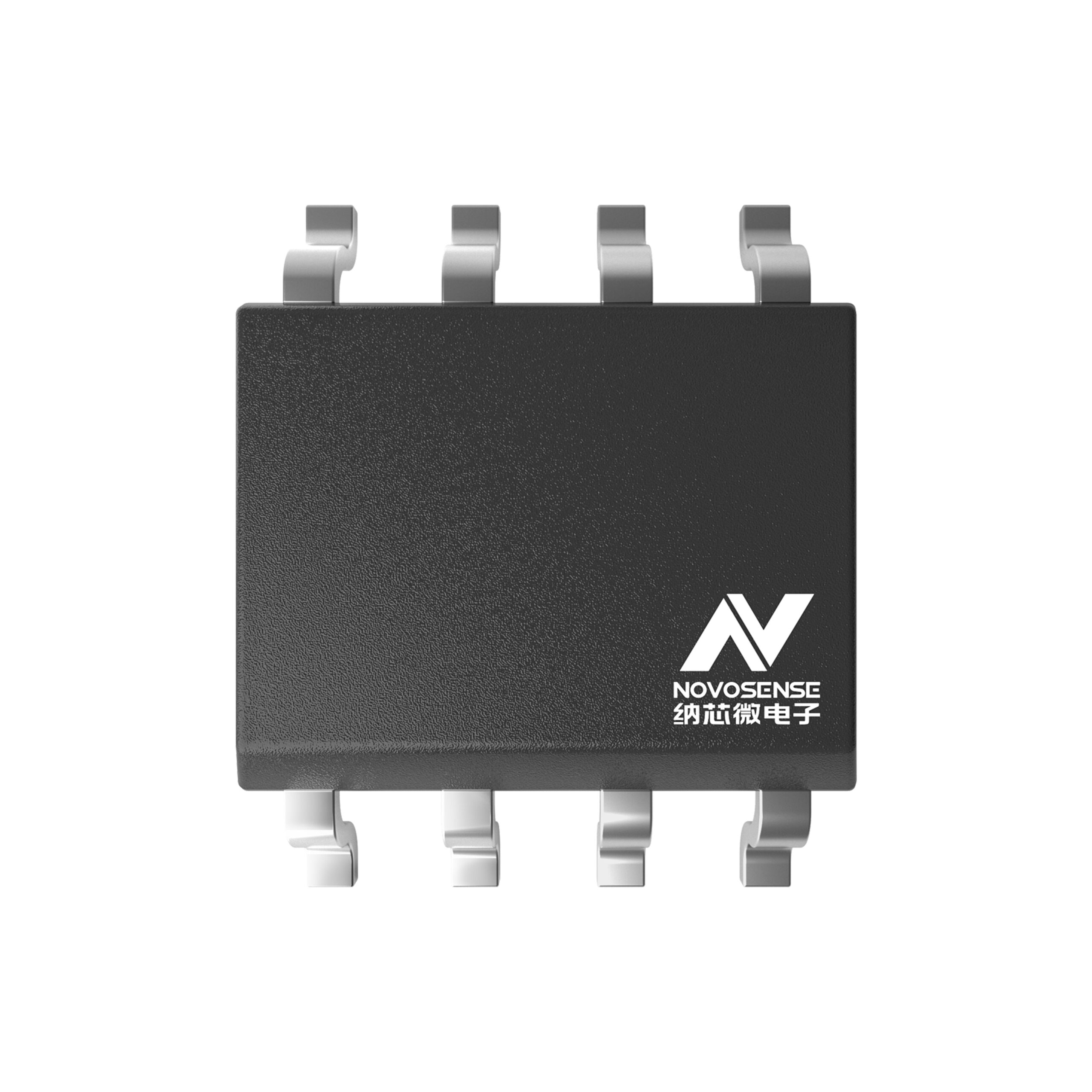
The NSD7312-Q1HSPR is an automotive-grade single H-bridge driver for brushed DC motors, designed for applications such as EV charger inlet locking and industrial VCU systems. It operates within a 5V to 36V supply range and delivers up to 3.6A peak current with 1.5A continuous drive capability. The device features a typical 520mΩ resistance (HS+LS) and supports PWM control via current chopping. Integrated protections include UVLO, OCP, and TSD, with automatic fault recovery and nFAULT indication.
Verify the specific suffix 'HSPR' against official Novosense documentation to confirm tape-and-reel packaging specifications and exact marking codes. Ensure the component meets the required AEC-Q100 Grade 1 classification for the target automotive application environment. Cross-reference the HSOP8 package dimensions with the mechanical drawing to ensure PCB footprint compatibility.
Select this component for brushed DC motor applications requiring high reliability in automotive environments. The integrated current chopping reduces system power requirements and bulk capacitance needs during startup or stall. The exposed pad design aids thermal dissipation, while the low quiescent current in sleep mode optimizes energy efficiency for battery-supplied systems.
This part belongs to the NSD731x series of brushed DC motor drivers from Novosense. The series includes variants like NSD7310 and NSD7312, with the '-Q1' suffix denoting automotive qualification. The NSD7312 specifically offers higher peak current compared to lower-current variants, making it suitable for demanding actuator loads in electric vehicles and industrial machinery.
NSD7312: Industrial grade equivalent without automotive certification.
The device provides automatic fault recovery when the fault condition is removed. It also features a dedicated n_FAULT pin to indicate fault status to the microcontroller.
The ISEN pin allows for current chopping regulation based on the internal reference and the voltage on the pin, which is proportional to the current flowing through the motor.
 NSD7312-Q1HSPR
The activity of extra discounts on wholesale prices is in full swing…
Please fill in your contact information and we will send you the latest wholesale price list.