 ChipApex | Global Electronic Components Supplier
SEARCH
Search Product
Search Post
— IC芯片 | 连接器 | 传感器 | 被动器件 —
Search productSearch post
— IC芯片 | 连接器 | 传感器 | 被动器件 —
Consult the customer manager about the wholesale price.
consultation hotline:86-132-6715-2157
email:[email protected]
Contact the product manager for consultation. One-stop consultation is available.
Do you want a lower wholesale price? Please send us your inquiry and we will reply immediately.
The NSL-32H-103 is a photocell output optocoupler manufactured by Advanced Photonix. It consists of an LED input optically coupled to a cadmium sulfide (CdS) photocell. The device provides electrical isolation between input and output circuits. Key specifications include a maximum forward current of 20 mA, a forward voltage of 2.5 V, and a reverse voltage rating of 4 V. The power dissipation is rated at 50 mW. It offers an insulation voltage of 2000 VRMS. The operating temperature range extends from -40°C to +75°C. The component is available in bulk packaging.
Verify the specific suffix and packaging configuration required for your assembly process. Confirm RoHS compliance status as indicated in official documentation, noting that some listings may indicate non-compliance. Ensure the selected variant matches the required lead frame and encapsulation type for your thermal and mechanical constraints. Cross-reference the manufacturer part number with distributor catalogs to confirm availability and exact datasheet version before ordering.
Select this component when high isolation voltage is required alongside light-dependent resistance characteristics. Consider the slow response time inherent to CdS cells compared to photodiode outputs. Evaluate the illuminated resistance range and dark resistance values against your circuit requirements. Ensure the operating temperature range meets your environmental conditions. Verify that the input current limits are respected within your drive circuit design.
The NSL-32H series represents Advanced Photonix's line of photocell output optocouplers. These devices utilize cadmium sulfide photoresistors as the sensing element. They are distinct from phototransistor or photodiode output types due to their resistive output nature. The series is designed for applications requiring simple interface circuits and high isolation voltages. The NSL-32H-103 is a specific variant within this family, characterized by its standard package and electrical ratings.
Direct replacements must match the photocell output type and isolation voltage. Compare illuminated resistance values and response times with alternatives like the NSL-32SR3 or NSL-33-007. Verify pinout compatibility and package dimensions for direct substitution. Check if the alternative component meets the same thermal and electrical specifications.
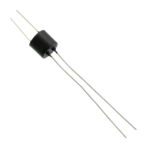 NSL-32H-103
The activity of extra discounts on wholesale prices is in full swing…
Please fill in your contact information and we will send you the latest wholesale price list.





