 ChipApex | Global Electronic Components Supplier
SEARCH
Search Product
Search Post
— IC芯片 | 连接器 | 传感器 | 被动器件 —
Search productSearch post
— IC芯片 | 连接器 | 传感器 | 被动器件 —
Consult the customer manager about the wholesale price.
consultation hotline:86-132-6715-2157
email:[email protected]
Contact the product manager for consultation. One-stop consultation is available.
Do you want a lower wholesale price? Please send us your inquiry and we will reply immediately.
The NTST20100CTG is a 100-V trench-based low forward voltage Schottky rectifier manufactured by onsemi. It belongs to the LVFR family, utilizing a trench topology designed for improved switching efficiency. The device features exceptionally low forward voltage drop and reduced leakage current compared to standard alternatives. It is configured as a dual common cathode unit, integrating two individual diode elements within a single package to facilitate compact circuit designs.
Verify the specific datasheet version when sourcing, as manufacturing updates may occur. Confirm that the ordering suffix matches the required packaging configuration. Ensure compatibility with thermal management requirements based on the intended load conditions. Cross-reference the part number with official onsemi documentation to confirm availability and compliance status before finalizing procurement plans.
Select this component for applications requiring high switching efficiency at 100-V ratings. The trench technology offers advantages in thermal performance due to lower forward voltage. Consider the dual common cathode configuration if bidirectional or parallel rectification is needed within a limited footprint. Evaluate thermal dissipation capabilities against the expected continuous current loads in the target design.
This device is part of onsemi's Low Forward Voltage Schottky Rectifiers (LVFR) family. It shares the trench-based architecture with related models such as the NTST30100CTG and NTSB20U100CTG. These devices collectively represent onsemi's strategy to enhance switching efficiency through advanced semiconductor processing techniques specifically tailored for power management applications.
Direct replacements within the same LVFR family include the NTST30100CTG for higher current capacity or the NTSB20U100CTG. Verify pinout compatibility and thermal resistance specifications when substituting. Ensure that the alternative device meets the original 100-V reverse voltage requirement and fits the existing PCB footprint constraints.
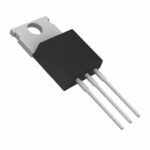 NTST20100CTG
The activity of extra discounts on wholesale prices is in full swing…
Please fill in your contact information and we will send you the latest wholesale price list.





