 ChipApex | Global Electronic Components Supplier
SEARCH
Search Product
Search Post
— IC芯片 | 连接器 | 传感器 | 被动器件 —
Search productSearch post
— IC芯片 | 连接器 | 传感器 | 被动器件 —
Consult the customer manager about the wholesale price.
consultation hotline:86-132-6715-2157
email:[email protected]
Contact the product manager for consultation. One-stop consultation is available.
Do you want a lower wholesale price? Please send us your inquiry and we will reply immediately.
The NTST40120CTG is a high-current Schottky rectifier manufactured by onsemi, designed for efficient power conversion in demanding applications. This component features a dual common cathode configuration housed in an I2PAK (TO-263AB) through-hole package, providing robust mechanical stability and thermal performance. It is rated for a maximum continuous forward current of 40 Amperes per diode and supports a peak repetitive reverse voltage of 120 Volts. The device utilizes low-barrier Schottky technology to minimize conduction losses and reduce heat generation during operation.
Verify the specific suffix 'G' indicates RoHS compliance when sourcing. Confirm the package type matches the I2PAK footprint requirements for your PCB layout. Ensure the thermal resistance characteristics align with your heatsinking strategy for 40A operation. Cross-reference the datasheet revision date to ensure compatibility with your design specifications.
Select this component when high current handling and low forward voltage are critical priorities. The dual common cathode setup simplifies circuit design compared to using discrete single diodes. Consider the thermal environment carefully, as high currents generate significant heat. Compare total power loss against alternative technologies like silicon carbide if efficiency demands exceed standard silicon capabilities.
This part belongs to onsemi's NTST series of high-performance Schottky rectifiers. The series is engineered for general-purpose power supply applications where reliability and efficiency are paramount. The I2PAK packaging is a standard choice for medium-to-high power through-hole designs, offering a balance between cost, performance, and ease of assembly in industrial and consumer electronics.
Direct replacements must match the 40A current rating, 120V voltage rating, and dual common cathode configuration. Verify that any substitute maintains similar forward voltage characteristics to preserve thermal performance. Check package pinout compatibility to ensure seamless integration without PCB redesign.
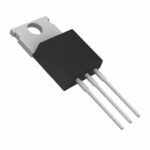 NTST40120CTG
The activity of extra discounts on wholesale prices is in full swing…
Please fill in your contact information and we will send you the latest wholesale price list.





