ChipApex | Global Electronic Components Supplier

SEARCH
Search Product
Search Post
— IC芯片 | 连接器 | 传感器 | 被动器件 —
Search productSearch post
— IC芯片 | 连接器 | 传感器 | 被动器件 —
Consult the customer manager about the wholesale price.
consultation hotline:86-132-6715-2157
email:[email protected]
Contact the product manager for consultation. One-stop consultation is available.
Do you want a lower wholesale price? Please send us your inquiry and we will reply immediately.
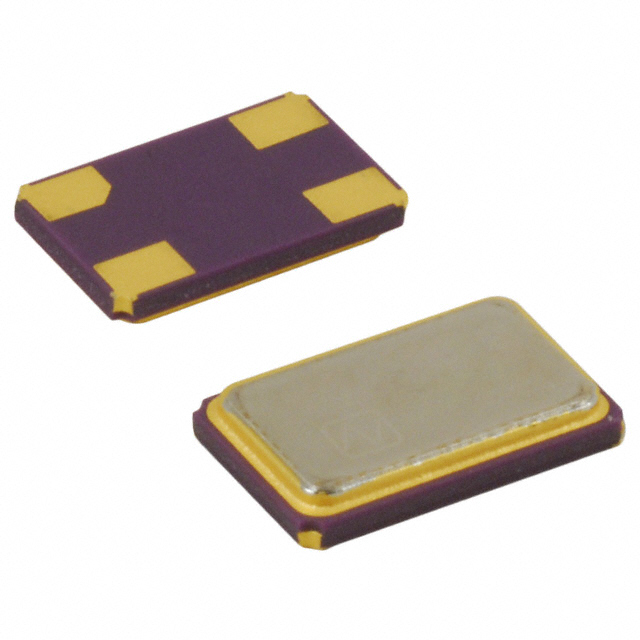
The NX5032SA-13.000000MHZ-G1 is a surface-mount crystal unit manufactured by NDK, designed for mobile communications and general electronic applications. It operates at a fundamental frequency of 13 MHz with a frequency tolerance and stability of ±10 ppm. The component features a load capacitance of 8 pF and an equivalent series resistance (ESR) of 40 Ohms. It utilizes a 4-SMD, no-lead package with dimensions of 4.90 mm in length, 3.10 mm in width, and a maximum height of 1.00 mm. The device supports a commercial operating temperature range of -20°C to +85°C and complies with RoHS standards.
This specific part number is officially classified as obsolete and no longer manufactured by NDK. Procurement should focus on verified replacement components or alternative suppliers offering functionally equivalent crystals. Verify that substitute parts match the required 13 MHz frequency, 8 pF load capacitance, and 4-SMD package dimensions to ensure mechanical and electrical compatibility in existing designs.
When selecting a replacement for this obsolete crystal, prioritize components with identical physical footprint and pin configuration to maintain PCB layout integrity. Ensure the substitute offers comparable frequency stability of ±10 ppm and an ESR near 40 Ohms to prevent oscillator startup failures. Confirm that the new component supports the required -20°C to +85°C operating range and maintains RoHS compliance for regulatory adherence.
The NX5032SA series represents NDK's line of surface-mount crystal units optimized for mobile communications. This series is characterized by small form factors and high frequency stability. The NX5032SA-13.000000MHZ-G1 specifically targets applications requiring precise timing references in portable and consumer electronics, leveraging NDK's expertise in quartz crystal fabrication.
ECS Inc. part number ECS-130-8-30B-CKM is documented as a similar replacement option for this obsolete component.
The part is officially obsolete and no longer manufactured by NDK.
Official documentation specifies a maximum driving level of 500 μW, though typical design practices often recommend lower levels to ensure longevity and frequency stability.
 NX5032SA-13.000000MHZ-G1

The activity of extra discounts on wholesale prices is in full swing…
Please fill in your contact information and we will send you the latest wholesale price list.