 ChipApex | Global Electronic Components Supplier

SEARCH
Search Product
Search Post
— IC芯片 | 连接器 | 传感器 | 被动器件 —
Search productSearch post
— IC芯片 | 连接器 | 传感器 | 被动器件 —
Consult the customer manager about the wholesale price.
consultation hotline:86-132-6715-2157
email:[email protected]
Contact the product manager for consultation. One-stop consultation is available.
Do you want a lower wholesale price? Please send us your inquiry and we will reply immediately.
The O3853QDCARQ1 is a multirail power supply integrated circuit designed for microcontrollers in safety-relevant automotive applications. Manufactured by Texas Instruments, it belongs to the TPS653853A-Q1 series and provides multiple regulated voltage rails required for complex system-on-chip architectures. The device supports an input voltage range of 2.3 V to 40 V and operates within an ambient temperature range of -40°C to +125°C. It is housed in a 48-pin HTSSOP package and holds AEC-Q100 qualification for automotive reliability standards.
Verify component authenticity through authorized distribution channels or direct manufacturer verification. Confirm the specific datasheet revision matches design requirements. Check current lifecycle status as automotive components may undergo obsolescence notices. Ensure packaging integrity upon receipt due to moisture sensitivity classification. Validate that the HTSSOP-48 footprint aligns with existing PCB layout constraints before finalizing procurement orders.
Select this component when designing safety-critical automotive systems requiring a consolidated power solution for TI microcontrollers. It is appropriate for applications needing multiple regulated outputs from a single IC to reduce board space. Consider its AEC-Q100 qualification if automotive reliability standards are mandatory. Evaluate thermal performance within the HTSSOP-48 package against system heat dissipation capabilities.
This part is part of the TPS65385x family of multirail power supplies from Texas Instruments. These devices are engineered to simplify power design for complex automotive microcontrollers by integrating multiple buck converters and low-dropout regulators. The family targets safety-relevant applications, ensuring compliance with automotive functional safety requirements while providing stable power rails for digital and analog subsystems.
The O3852AQDCARQ1 is a related variant within the same TPS65385xA-Q1 family. Verify pin compatibility and output specifications before substitution. Consult official documentation for differences in rail configurations or current capabilities between these specific part numbers.
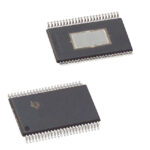 O3853QDCARQ1

The activity of extra discounts on wholesale prices is in full swing…
Please fill in your contact information and we will send you the latest wholesale price list.





