 ChipApex | Global Electronic Components Supplier
SEARCH
Search Product
Search Post
— IC芯片 | 连接器 | 传感器 | 被动器件 —
Search productSearch post
— IC芯片 | 连接器 | 传感器 | 被动器件 —
Consult the customer manager about the wholesale price.
consultation hotline:86-132-6715-2157
email:[email protected]
Contact the product manager for consultation. One-stop consultation is available.
Do you want a lower wholesale price? Please send us your inquiry and we will reply immediately.
The OMAP3530ECBB is a Texas Instruments applications processor from the OMAP-35xx series, designed for specialized application processing. It integrates an ARM Cortex-A8 core and a TMS320C64x+ DSP core within a single device. The component operates at maximum clock frequencies of 430 MHz or 600 MHz depending on the specific variant configuration. It utilizes a PBGA-515 package with 188 I/O pins and supports a data bus width of 32 bits. The processor functions within a supply voltage range of 985 mV to 1.35 V and maintains operation across a temperature range of -40°C to +105°C.
Verify the exact suffix designation against the manufacturer's official datasheet to confirm performance grades and feature sets. Ensure compatibility with required operating temperatures and voltage levels. Confirm packaging specifications match design requirements. Check for moisture sensitivity level constraints during assembly. Validate that the selected variant meets all regulatory compliance standards such as RoHS.
Select this component when high-performance multimedia processing is required alongside general-purpose computing. Consider the dual-core architecture for efficient task distribution between the application processor and digital signal processor. Evaluate power consumption profiles against system thermal constraints. Verify interface availability for connecting peripheral devices and memory controllers. Assess package size limitations for the target PCB layout.
This part belongs to the Texas Instruments OMAP-35xx family of applications processors. These devices are engineered to deliver robust performance for complex embedded systems requiring both control logic and media handling. The series is characterized by its integration of advanced processing cores and extensive connectivity options suitable for industrial and consumer electronics.
Consult the official Texas Instruments documentation for confirmed substitute part numbers within the OMAP-35xx family. Verify pin-to-pin compatibility and electrical parameter alignment before substitution. Review errata sheets for any known issues associated with alternative variants.
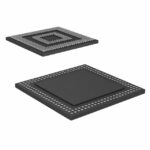 OMAP3530ECBB
The activity of extra discounts on wholesale prices is in full swing…
Please fill in your contact information and we will send you the latest wholesale price list.





