 ChipApex | Global Electronic Components Supplier
SEARCH
Search Product
Search Post
— IC芯片 | 连接器 | 传感器 | 被动器件 —
Search productSearch post
— IC芯片 | 连接器 | 传感器 | 被动器件 —
Consult the customer manager about the wholesale price.
consultation hotline:86-132-6715-2157
email:[email protected]
Contact the product manager for consultation. One-stop consultation is available.
Do you want a lower wholesale price? Please send us your inquiry and we will reply immediately.
The ONET4251PARGTR is a limiting amplifier manufactured by Texas Instruments, designed for high-speed serial data transmission applications. It supports data rates ranging from 1 Gbps to 4.25 Gbps. The device integrates Loss of Signal (LOS) and Received Signal Strength Indicator (RSSI) monitoring capabilities, facilitating system diagnostics and link management. It is housed in a 16-pin Very Thin Quad Flat No-Lead (VQFN) package with dimensions of 3 mm. The component operates within an industrial temperature range of -40°C to 85°C and complies with RoHS standards.
Verify the complete part number including the 'TR' tape-and-reel suffix when ordering. Confirm the specific package variant matches the HVQCCN/LCC16 designation. Ensure compatibility with the required operating temperature range of -40°C to 85°C for your application environment. Cross-reference the manufacturer's latest documentation for any updates regarding pin configurations or electrical characteristics.
Select this component for designs requiring limiting amplification at speeds up to 4.25 Gbps. The integrated LOS and RSSI features are critical for applications needing real-time link status monitoring without external circuitry. Consider the 16-VQFN package constraints for PCB layout and thermal management. Ensure the input signal levels align with the amplifier's specified operating range for optimal performance.
This device belongs to the ONET series of limiting amplifiers from Texas Instruments. These components are engineered for optical and copper-based high-speed interfaces. The ONET4251 specifically targets multi-gigabit serial applications where signal integrity and diagnostic feedback are essential. It serves as a key building block in transceiver modules and interface circuits for modern communication infrastructure.
Consult official substitution guides for compatible alternatives. Verify that any replacement maintains the 1-4.25 Gbps speed range and 16-pin VQFN footprint. Ensure equivalent LOS and RSSI functionality if these features are required. Check for pin-to-pin compatibility to minimize redesign efforts.
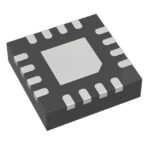 ONET4251PARGTR
The activity of extra discounts on wholesale prices is in full swing…
Please fill in your contact information and we will send you the latest wholesale price list.





