 ChipApex | Global Electronic Components Supplier
SEARCH
Search Product
Search Post
— IC芯片 | 连接器 | 传感器 | 被动器件 —
Search productSearch post
— IC芯片 | 连接器 | 传感器 | 被动器件 —
Consult the customer manager about the wholesale price.
consultation hotline:86-132-6715-2157
email:[email protected]
Contact the product manager for consultation. One-stop consultation is available.
Do you want a lower wholesale price? Please send us your inquiry and we will reply immediately.
The OPIA2110DTUE is a single-channel transistor output optocoupler manufactured by TT Electronics/Optek Technology. It features a 6-DIP surface mount package and provides 5000Vrms electrical isolation between input and output circuits. The device utilizes an infrared LED coupled to a phototransistor, offering a typical current transfer ratio of 40% at 10mA forward current. Key electrical specifications include a collector-emitter breakdown voltage of 60V minimum, a maximum dark current of 100nA, and a typical rise/fall time of 4µs/3µs. It operates within a temperature range of -55°C to 125°C.
Verify the specific suffix 'DTUE' corresponds to the required surface mount (SMD) configuration, as standard variants may differ in packaging. Confirm RoHS compliance status and ensure the supplier provides original manufacturer documentation. Check for any specific screening requirements if used in high-reliability applications, such as MIL-spec testing per MIL-STD-750 or MIL-PRF-38535 standards.
Select this component when a surface mount solution with 5000Vrms isolation is required. Consider the 60V collector-emitter voltage rating and 50mA output current capability for load matching. Evaluate the 4µs/3µs switching speed against system timing requirements. Ensure the operating temperature range of -55°C to 125°C meets environmental conditions.
This part belongs to the OPIA series of high-reliability optocouplers from TT Electronics/Optek Technology. The series includes various configurations such as OPIA2110ATUE and OPIA500B, offering choices between single/dual LEDs and phototransistor/photo-darlington sensors. These components are designed for demanding industrial, aerospace, and defense applications, emphasizing quality and reliability.
The OPIA2110ATUE is a pin-compatible alternative within the same series, differing primarily in package type (through-hole vs. surface mount). Verify that the replacement maintains the required 5000Vrms isolation and electrical characteristics. No other direct substitutes are explicitly confirmed in public data.
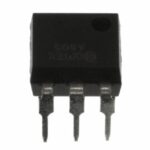 OPIA2110DTUE
The activity of extra discounts on wholesale prices is in full swing…
Please fill in your contact information and we will send you the latest wholesale price list.







