 ChipApex | Global Electronic Components Supplier
SEARCH
Search Product
Search Post
— IC芯片 | 连接器 | 传感器 | 被动器件 —
Search productSearch post
— IC芯片 | 连接器 | 传感器 | 被动器件 —
Consult the customer manager about the wholesale price.
consultation hotline:86-132-6715-2157
email:[email protected]
Contact the product manager for consultation. One-stop consultation is available.
Do you want a lower wholesale price? Please send us your inquiry and we will reply immediately.
The OPIA401BTU is a single-channel transistor output optocoupler manufactured by TT Electronics/Optek Technology. It features a Darlington transistor output stage designed for high current transfer applications. The device provides electrical isolation with a rated isolation voltage of 3750Vrms. It utilizes a surface-mount 4-SOP package with a 2.54mm pitch, suitable for automated assembly processes. Key electrical characteristics include a minimum DC current transfer ratio of 1000% at an input current of 1mA, a maximum collector-emitter saturation voltage of 1.5V, and a typical rise time of 100µs. The component supports a maximum forward current of 50mA and operates within a temperature range of -30°C to 100°C.
Verify the specific suffix against official manufacturer documentation to confirm package type and tape/reel specifications. Confirm availability status as distribution data may indicate obsolete or end-of-life classifications. Cross-reference the full part number with the latest datasheet revision to ensure compliance with current RoHS and REACH regulatory standards before finalizing procurement orders.
Select this component when high current drive capability is required from a low-power control signal. The Darlington output allows for direct driving of loads that exceed standard phototransistor limits. Ensure the application environment remains within the specified operating temperature range. Verify that the required isolation voltage meets the system safety requirements.
This device belongs to the OPIA series of optocouplers from TT Electronics/Optek Technology. The series includes various configurations for different isolation and speed requirements. The OPIA401 variant specifically targets applications needing high current transfer ratios. It is distinct from other series members by its specific output stage and package dimensions.
Public records identify LTV-352T by Lite-On as a direct substitute for the related OPIA401BTR variant. Verify pinout compatibility and electrical parameter equivalence before substituting.
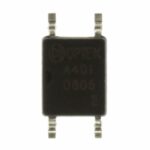 OPIA401BTU
The activity of extra discounts on wholesale prices is in full swing…
Please fill in your contact information and we will send you the latest wholesale price list.





