 ChipApex | Global Electronic Components Supplier
SEARCH
Search Product
Search Post
— IC芯片 | 连接器 | 传感器 | 被动器件 —
Search productSearch post
— IC芯片 | 连接器 | 传感器 | 被动器件 —
Consult the customer manager about the wholesale price.
consultation hotline:86-132-6715-2157
email:[email protected]
Contact the product manager for consultation. One-stop consultation is available.
Do you want a lower wholesale price? Please send us your inquiry and we will reply immediately.
The OPIA814DTUA is a single-channel transistor output optocoupler manufactured by TT Electronics/Optek Technology. It features an NPN phototransistor output and utilizes a DIP-4 through-hole package. The device provides a high insulation voltage of 5000 Vrms, ensuring robust electrical isolation between input and output circuits. Key electrical parameters include a maximum collector-emitter voltage of 60 V, a maximum collector current of 50 mA, and a forward current of 50 mA. The typical current transfer ratio is 600% at 5 mA input. Operating characteristics specify a rise time of 20 µs and a fall time of 20 µs, with a power dissipation rating of 200 mW. The unit operates within a temperature range of -30°C to +100°C.
Verify component authenticity upon receipt, as the OPIA814DTUA is listed as discontinued. Confirm package integrity and pin alignment against the DIP-4 specification before soldering. Check datasheet revisions for any historical parameter updates that may affect circuit compatibility. Ensure storage conditions remain within specified limits to prevent degradation of the internal optical components prior to assembly.
Select this component when high isolation voltage is required alongside moderate switching speeds. The 20 µs rise and fall times suit applications where nanosecond precision is unnecessary. Compare the 60 V collector voltage limit against load requirements. Consider the DIP-4 form factor if surface-mount alternatives are unsuitable for the mechanical constraints of the target design.
This device belongs to the Optek transistor output optocoupler family, designed for general-purpose isolation tasks. It complements other models in the series by offering higher isolation ratings compared to lower-voltage variants. The product line emphasizes reliability in harsh environments, supporting long-term operation in industrial and commercial equipment sectors.
Publicly confirmed substitute part numbers are not available in the provided documentation. Verify pinout compatibility and electrical specifications carefully when evaluating alternative components from other manufacturers.
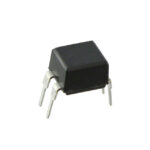 OPIA814DTUA
The activity of extra discounts on wholesale prices is in full swing…
Please fill in your contact information and we will send you the latest wholesale price list.






