 ChipApex | Global Electronic Components Supplier
SEARCH
Search Product
Search Post
— IC芯片 | 连接器 | 传感器 | 被动器件 —
Search productSearch post
— IC芯片 | 连接器 | 传感器 | 被动器件 —
Consult the customer manager about the wholesale price.
consultation hotline:86-132-6715-2157
email:[email protected]
Contact the product manager for consultation. One-stop consultation is available.
Do you want a lower wholesale price? Please send us your inquiry and we will reply immediately.
The PAM8004DR is a stereo Class-D audio amplifier manufactured by Diodes Incorporated in an SOP-16L package. It delivers 2.5W output at 10% THD+N with a 4Ω load and 5V supply, or 3W into a 3Ω load. The device operates on a 2.5V to 5.5V supply range within -40°C to +85°C temperatures. Key electrical parameters include a quiescent current of 7mA max at 5V, shutdown current of 1µA, and switching frequency of 210kHz. It features low THD+N (0.16% typ), high PSRR (-70dB), and includes short circuit and thermal protection.
Verify the specific ordering suffix DR against the manufacturer's official documentation to confirm the SOP-16L package type and tape-and-reel packaging configuration. Ensure compatibility with standard surface-mount assembly processes. Confirm that the component meets all relevant environmental compliance standards required for the target market before finalizing procurement orders.
Select this component when a filterless stereo solution is required to minimize bill-of-materials costs and board space. It is suitable for designs operating between 2.5V and 5.5V where moderate output power up to 3W is sufficient. Consider the thermal resistance characteristics of the SOP-16L package for adequate heat dissipation in enclosed enclosures without active cooling.
The PAM8004 belongs to the PAM800x series of audio amplifiers from Diodes Incorporated. This family focuses on high-efficiency Class-D technology designed for portable consumer electronics. The PAM8004 specifically targets stereo applications requiring direct speaker drive capabilities without complex output filtering networks.
No public confirmed substitute part numbers are available in the provided documentation.
The device incorporates thermal protection that disables outputs if the internal die temperature exceeds approximately 140°C. The fault clears automatically once the temperature drops by about 30°C.
The bypass capacitor on the VREF pin determines the startup rate during recovery from shutdown and reduces noise coupling from the power supply into the output drive signal, improving PSRR and THD+N performance.
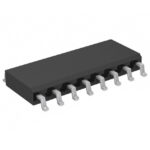 PAM8004DR
The activity of extra discounts on wholesale prices is in full swing…
Please fill in your contact information and we will send you the latest wholesale price list.







