 ChipApex | Global Electronic Components Supplier
SEARCH
Search Product
Search Post
— IC芯片 | 连接器 | 传感器 | 被动器件 —
Search productSearch post
— IC芯片 | 连接器 | 传感器 | 被动器件 —
Consult the customer manager about the wholesale price.
consultation hotline:86-132-6715-2157
email:[email protected]
Contact the product manager for consultation. One-stop consultation is available.
Do you want a lower wholesale price? Please send us your inquiry and we will reply immediately.
The PAM8302AAYCR is a 2.5W Class-D mono audio amplifier manufactured by Diodes Incorporated, housed in a U-DFN3030-8 (Type E) package with a standard tape and reel quantity of 3000 units. It operates on a supply voltage range of 2.0V to 5.5V and functions within an ambient temperature range of -40°C to +85°C. The device delivers up to 2.5W output power at 10% THD+N into a 4Ω load with a 5V supply, achieving peak efficiency up to 88%. Key electrical characteristics include a quiescent current of 4mA typ., shutdown current under 1µA, and a differential gain of 23.5dB.
Verify the specific ordering suffix 'Y' corresponds to the U-DFN3030-8 (Type E) package configuration as defined in the manufacturer's ordering information. Confirm that the required standard package quantity aligns with your production volume needs. Ensure compatibility with RoHS 3 and halogen-free environmental standards if mandated by your design specifications.
Select this component when a compact surface-mount solution is required for single-channel audio amplification. The U-DFN3030-8 package offers superior thermal performance compared to MSOP-8 or SO-8 variants. Consider its filterless design for applications prioritizing minimal external component count and reduced board space constraints.
This part belongs to the PAM8302A series of 2.5W filterless Class-D mono audio amplifiers from Diodes Incorporated. The series provides multiple packaging options including MSOP-8, SO-8, and U-DFN3030-8 (Type E). All variants share identical electrical performance characteristics, differing only in physical footprint and thermal resistance properties.
Direct substitutes within the same family include PAM8302AASCR (MSOP-8) and PAM8302AADCR (SO-8), which offer identical electrical functionality but require different PCB footprints.
The device utilizes a specialized Class-D architecture that allows it to drive speakers directly without requiring external low-pass output filters, thereby saving PCB area and system cost.
The internal feedback network sets a maximum closed-loop gain of approximately 23.5dB, determined by internal resistors of 150kΩ and 10kΩ.
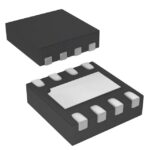 PAM8302AAYCR
The activity of extra discounts on wholesale prices is in full swing…
Please fill in your contact information and we will send you the latest wholesale price list.






