 ChipApex | Global Electronic Components Supplier
SEARCH
Search Product
Search Post
— IC芯片 | 连接器 | 传感器 | 被动器件 —
Search productSearch post
— IC芯片 | 连接器 | 传感器 | 被动器件 —
Consult the customer manager about the wholesale price.
consultation hotline:86-132-6715-2157
email:[email protected]
Contact the product manager for consultation. One-stop consultation is available.
Do you want a lower wholesale price? Please send us your inquiry and we will reply immediately.
The PBLS2023D,115 is a PNP low VCEsat Breakthrough In Small Signal (BISS) transistor paired with an NPN Resistor-Equipped Transistor (RET), housed in a SOT457 (SC-74) plastic package. It operates as a 20 V, 1.8 A load switch. Key electrical parameters include a collector-emitter voltage of -20 V for the PNP section and 50 V for the NPN section. The peak collector current reaches -3 A. The saturation resistance is typically 78 mΩ at -1.8 A. The input bias resistor is 10 kΩ with a ratio of 1. Power dissipation is 370 mW at 25 °C on FR4 PCBs. Operating temperature ranges from -55 °C to +150 °C.
Verify the specific ordering suffix against official Nexperia documentation to confirm packaging details such as tape and reel specifications. Ensure compatibility with standard surface-mount assembly processes. Confirm RoHS compliance status through the manufacturer's latest product data sheet before finalizing procurement plans.
Select this component when a compact solution is required for switching loads up to 1.8 A with low saturation voltage. The integrated NPN RET simplifies drive circuitry by eliminating external base resistors. Verify thermal performance requirements against the specified junction-to-ambient thermal resistance values for the target PCB layout.
This device belongs to the PBLS series of digital transistors manufactured by Nexperia. The company originated from the NXP Standard Product business. The PBLS2023D specifically integrates a PNP power transistor with an NPN control transistor, offering a high-density alternative to discrete component arrangements in portable and automotive electronics.
Check for direct substitutes within the PBLS family or other Nexperia BISS load switches. Verify pinout compatibility and electrical parameter margins, particularly VCEO and IC ratings, before replacing existing designs with alternative part numbers.
The maximum peak collector current (ICM) is -3 A for a single pulse duration of tp ≤ 1 ms.
Yes, the PBLS2023D is qualified in accordance with the AEC-Q101 standard for discrete semiconductors.
The typical value for the input bias resistor R1 is 10 kΩ, with a range of 7 kΩ to 13 kΩ.
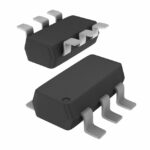 PBLS2023D,115
The activity of extra discounts on wholesale prices is in full swing…
Please fill in your contact information and we will send you the latest wholesale price list.




