 ChipApex | Global Electronic Components Supplier
SEARCH
Search Product
Search Post
— IC芯片 | 连接器 | 传感器 | 被动器件 —
Search productSearch post
— IC芯片 | 连接器 | 传感器 | 被动器件 —
Consult the customer manager about the wholesale price.
consultation hotline:86-132-6715-2157
email:[email protected]
Contact the product manager for consultation. One-stop consultation is available.
Do you want a lower wholesale price? Please send us your inquiry and we will reply immediately.
The PBP-60+ is a lumped LC bandpass filter manufactured by Mini-Circuits, designed for radio frequency signal conditioning applications. It operates with a center frequency of 60 MHz and provides a bandwidth ranging from 55 to 67 MHz. The component features an elliptic response characteristic and maintains a standard impedance of 50 ohms. Key electrical specifications include an insertion loss of 1.5 dB and a stopband attenuation of 40 dB at 80 MHz. The device is housed in an A01 case style, which corresponds to an 8-DIP module package, ensuring compatibility with through-hole termination styles for reliable circuit integration.
Verify the specific datasheet revision when sourcing, as electrical parameters may vary between releases. Confirm that the required package style matches the 8-DIP configuration. Ensure the operating temperature range meets the application requirements, as the component is rated for industrial temperatures. Cross-reference the part number suffix to confirm the exact performance specifications intended for the design.
Select this component when a fixed center frequency of 60 MHz is required with minimal insertion loss. The elliptic response makes it suitable for applications demanding high selectivity. Consider the physical dimensions of the 8-DIP package during layout planning. Verify that the power handling capabilities align with the signal levels present in the target circuit path.
Mini-Circuits produces a wide range of RF and microwave components, including filters, amplifiers, and mixers. The PBP-60+ belongs to their line of lumped LC bandpass filters, which are known for compact size and cost-effectiveness compared to distributed element designs. These components are widely used in wireless communications, industrial automation, and medical electronics where reliable signal filtering is critical.
Direct substitutes must match the 60 MHz center frequency, 50-ohm impedance, and 8-DIP package. Check for equivalent elliptic response characteristics and similar insertion loss values. Verify that alternative parts support the same operating temperature range and have compatible pin configurations for direct replacement without PCB modification.
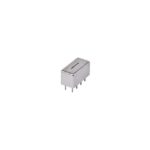 PBP-60+
The activity of extra discounts on wholesale prices is in full swing…
Please fill in your contact information and we will send you the latest wholesale price list.





