 ChipApex | Global Electronic Components Supplier

SEARCH
Search Product
Search Post
— IC芯片 | 连接器 | 传感器 | 被动器件 —
Search productSearch post
— IC芯片 | 连接器 | 传感器 | 被动器件 —
Consult the customer manager about the wholesale price.
consultation hotline:86-132-6715-2157
email:[email protected]
Contact the product manager for consultation. One-stop consultation is available.
Do you want a lower wholesale price? Please send us your inquiry and we will reply immediately.
The PCA9533D/01,112 is a 4-bit I²C bus and SMBus LED dimmer IC designed for brightness control applications. It operates within a supply voltage range of 2.3 V to 5.5 V and supports clock frequencies from 0 Hz to 400 kHz. The device features four open-drain outputs capable of sinking up to 25 mA per channel, with a total package current limit of 100 mA. It utilizes internal PWM generation for 256-level brightness adjustment and includes two programmable blink rates. The component is housed in an SOIC-8 surface-mount package and functions across an industrial temperature range of -40°C to +85°C.
Verify the specific suffix '112' against the manufacturer's latest documentation, as this indicates a tube packaging format which may differ from standard reel options. Confirm availability status, as this specific part number variant may be subject to discontinuation or limited stock constraints compared to the '118' tape-and-reel version. Ensure the fixed I²C address associated with the '/01' designation matches the system topology requirements.
Select this component when a fixed I²C address compatible with other /01 devices is required on the same bus segment. Consider the SOIC-8 package dimensions for PCB layout constraints. Evaluate the 25 mA output capability against the target LED forward current requirements. Verify that the internal PWM resolution meets the visual dimming smoothness needs of the application.
This device belongs to the PCA9533 family of LED controllers, which are optimized for low-power I²C communication. It serves as a specialized interface between microcontrollers and LED arrays, replacing discrete logic or general-purpose I/O expanders that lack native dimming capabilities. The '/01' suffix distinguishes its hardware address from the '/02' variant, allowing mixed usage on a single bus line.
PCA9533DP/01,118 (TSSOP-8 package, tape & reel)
It contains an internal oscillator that allows users to program two distinct blink rates and duty cycles directly via the I²C bus, eliminating the need for external capacitors or resistors.
Yes, any output channel not utilized for LED driving can be configured as a general-purpose input or output for other system functions.
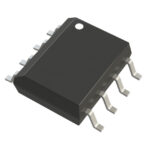 PCA9533D/01,112

The activity of extra discounts on wholesale prices is in full swing…
Please fill in your contact information and we will send you the latest wholesale price list.





