 ChipApex | Global Electronic Components Supplier
SEARCH
Search Product
Search Post
— IC芯片 | 连接器 | 传感器 | 被动器件 —
Search productSearch post
— IC芯片 | 连接器 | 传感器 | 被动器件 —
Consult the customer manager about the wholesale price.
consultation hotline:86-132-6715-2157
email:[email protected]
Contact the product manager for consultation. One-stop consultation is available.
Do you want a lower wholesale price? Please send us your inquiry and we will reply immediately.
The PCF8578T/1,118 is a low-power CMOS LCD row and column driver designed for driving dot matrix displays with multiplex rates of 1:8, 1:16, 1:24, or 1:32. It features 40 programmable outputs configurable as 32/8, 24/16, 16/24, or 8/32 rows/columns. The device includes 1280-bit RAM for display data storage and an on-chip oscillator requiring only one external resistor. It operates on a logic supply voltage range of 2.5 V to 6 V with a maximum LCD supply voltage of 9 V. Communication is handled via a two-line bidirectional I²C bus interface.
Verify component authenticity through authorized NXP distributors or verified supply chain channels. Confirm package integrity upon receipt, as surface-mount devices are sensitive to moisture and physical damage. Check date codes against current production status, noting that this specific part number may be subject to discontinuation or lifecycle changes. Ensure compatibility with existing PCB footprints and soldering profiles before mass production integration.
Select this component for applications requiring flexible dot matrix LCD driving with minimal microcontroller intervention. The I²C interface reduces pin count requirements compared to parallel interfaces. Consider the 1280-bit RAM capacity for display complexity needs. Evaluate system power constraints against the 2.5 V to 6 V operating range. Verify that the required multiplex rate and bias configuration align with the available hardware settings.
The PCF8578 series belongs to NXP's dedicated LCD driver family, designed to offload display management from main processors. It complements the PCF8579 column driver to form a scalable chipset solution. This specific variant utilizes a VSO-56 package, offering a compact footprint suitable for space-constrained designs. It represents a specialized peripheral within the broader clock and timer IC category.
Public confirmed substitute part numbers are not available in the provided documentation. As the product status indicates discontinuation, alternative solutions require evaluating functional equivalents from other manufacturers or newer generations within the NXP portfolio that support similar I²C LCD driving capabilities.
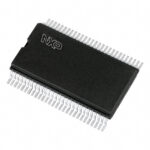 PCF8578T/1,118
The activity of extra discounts on wholesale prices is in full swing…
Please fill in your contact information and we will send you the latest wholesale price list.






