 ChipApex | Global Electronic Components Supplier
SEARCH
Search Product
Search Post
— IC芯片 | 连接器 | 传感器 | 被动器件 —
Search productSearch post
— IC芯片 | 连接器 | 传感器 | 被动器件 —
Consult the customer manager about the wholesale price.
consultation hotline:86-132-6715-2157
email:[email protected]
Contact the product manager for consultation. One-stop consultation is available.
Do you want a lower wholesale price? Please send us your inquiry and we will reply immediately.
The PCF8579HT/1 is a low-power CMOS LCD column driver designed for driving multiplexed dot-matrix displays with rates of 1:8, 1:16, 1:24, or 1:32. It provides 40 outputs to drive a 32 x 40 point matrix and includes 1280-bit RAM for display data storage. The device communicates via an I²C bus and supports cascading up to 16 units on a single bus using two slave addresses. It operates with a logic supply voltage range of 2.5 V to 6 V and a maximum LCD supply voltage of 9 V.
Verify the complete part number including the suffix, as variations exist for different package types such as TQFP64 or VSO56. Confirm availability status, as this component may be listed as discontinued or in sample stages depending on the current inventory cycle. Ensure the selected variant matches the required pin configuration and thermal specifications for the target application environment.
Select this component when designing systems requiring high-density LCD column driving with minimal microcontroller intervention. It is specifically intended to work in conjunction with the PCF8578 row driver to handle complex multiplexing ratios. Consider its I²C interface compatibility and power consumption characteristics relative to the system's voltage constraints and display size requirements.
This device belongs to NXP's family of low-power CMOS LCD drivers. It is engineered to complement the PCF8578 row driver, creating a scalable solution for driving extensive dot-matrix displays. Together, these components can manage displays with up to 40,960 points, offering a flexible architecture for various graphical interface needs.
Public confirmed substitute part numbers are not available in the provided documentation. Verify if the PCF8579T variant offers identical functionality within the same package constraints before considering alternative sourcing options.
It utilizes 1280-bit RAM with automatic incrementing addressing and display bank switching to reduce communication overhead when updating the display content.
Up to 16 PCF8579 devices can be cascaded, allowing a total of 32 devices on the same I²C bus by utilizing two distinct slave addresses.
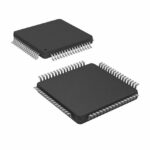 PCF8579HT/1
The activity of extra discounts on wholesale prices is in full swing…
Please fill in your contact information and we will send you the latest wholesale price list.





