 ChipApex | Global Electronic Components Supplier
SEARCH
Search Product
Search Post
— IC芯片 | 连接器 | 传感器 | 被动器件 —
Search productSearch post
— IC芯片 | 连接器 | 传感器 | 被动器件 —
Consult the customer manager about the wholesale price.
consultation hotline:86-132-6715-2157
email:[email protected]
Contact the product manager for consultation. One-stop consultation is available.
Do you want a lower wholesale price? Please send us your inquiry and we will reply immediately.
The PCF8885TS/1,118 is a capacitive 8-channel touch and proximity sensor interface manufactured by NXP Semiconductors. It utilizes a patented EDISEN method to detect static capacitance changes on remote sensing plates connected via coaxial cable. The device features continuous auto-calibration to compensate for environmental drift and supports matrix arrangements with interrupt generation only upon simultaneous activation of two channels. It operates within a voltage range of 2.5 V to 5.5 V and includes an I²C Fast-mode Plus (Fm+) compatible interface with two addresses. The component is housed in a TSSOP28 package and functions across an operating temperature range of -40 °C to +85 °C.
Verify the specific ordering suffix /1,118 corresponds to the tape and reel delivery form as documented in the official datasheet. Confirm that the TSSOP28 package variant matches the required PCB footprint. Ensure compatibility with the system's I²C bus voltage levels and check for any end-of-life status updates from the manufacturer prior to finalizing procurement plans.
Select this component when an 8-channel capacitive solution with remote sensing capability is required. Consider the low-power sleep mode if battery operation is a priority. Verify that the TSSOP28 package dimensions fit the design constraints. Evaluate the need for matrix arrangement features if multiple sensors are arranged in a grid configuration.
The PCF8885 series represents NXP's capacitive sensor interface family designed for robust touch detection. The TS suffix denotes the TSSOP28 plastic small outline package variant. This part integrates analog front-end processing with digital control logic to simplify system design for touch-sensitive applications requiring high reliability and low power consumption.
Check for updated revisions of the PCF8885TS/1,118 or alternative packages within the same product family. Consult the manufacturer's obsolescence notices for potential lifecycle changes. No direct cross-model substitutes are confirmed in the provided documentation.
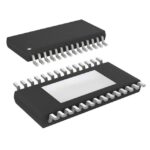 PCF8885TS/1,118
The activity of extra discounts on wholesale prices is in full swing…
Please fill in your contact information and we will send you the latest wholesale price list.





