ChipApex | Global Electronic Components Supplier
SEARCH
Search Product
Search Post
— IC芯片 | 连接器 | 传感器 | 被动器件 —
Search productSearch post
— IC芯片 | 连接器 | 传感器 | 被动器件 —
Consult the customer manager about the wholesale price.
consultation hotline:86-132-6715-2157
email:[email protected]
Contact the product manager for consultation. One-stop consultation is available.
Do you want a lower wholesale price? Please send us your inquiry and we will reply immediately.
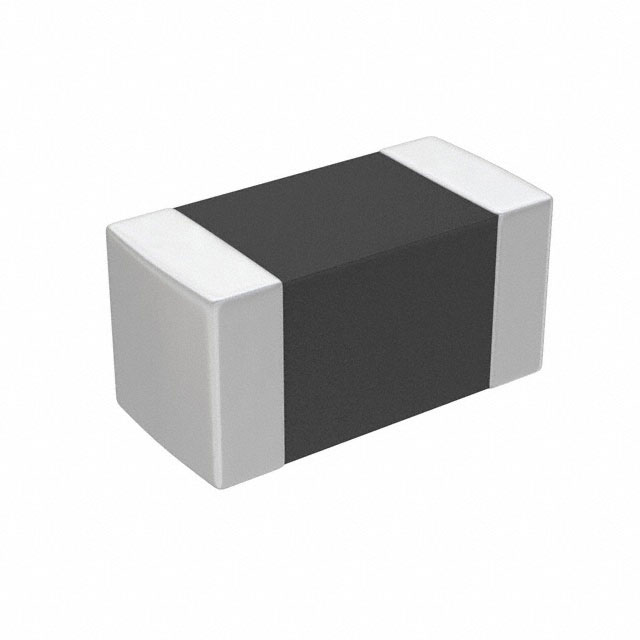
The PE-0402FB100XT is a surface-mount ferrite chip bead from Pulse Electronics, designed for electromagnetic interference (EMI) suppression in compact electronic circuits. It features a 0402 package with dimensions of 1.0 mm length, 0.5 mm width, and 0.5 mm height. The component provides an impedance of 10 ohms at 100 MHz and supports a maximum DC current of 1 A. Its maximum DC resistance is 30 milliohms, ensuring minimal signal loss. It operates within a temperature range of -40°C to +105°C.
Verify the specific suffix 'XT' against official Pulse Electronics documentation to confirm packaging configuration, as suffixes often denote reel or cut-tape variations. Ensure the requested quantity matches the manufacturer's standard packaging units. Cross-reference the full part number with authorized distributors to confirm RoHS compliance status and current production lifecycle stage before finalizing procurement orders.
Select this component when low insertion loss is critical due to its 30 mΩ DC resistance. The 1 A current rating suits moderate power applications, while the 10 Ω impedance at 100 MHz targets specific high-frequency noise profiles. The 0402 size allows integration into dense PCB layouts where larger ferrite beads cannot fit. Verify thermal performance requirements against the +105°C maximum operating temperature limit.
This part belongs to the PE-0402FB series of ferrite chip beads manufactured by Pulse Electronics. The series offers various impedance values tailored for different frequency ranges. The 0402 form factor represents a standard metric size (1005), widely adopted in modern electronics manufacturing for miniaturization. The FB designation typically indicates a general-purpose ferrite material composition optimized for broadband noise suppression.
Direct substitutes include other 0402 ferrite beads with similar 10 Ω impedance at 100 MHz and comparable current ratings. Check datasheets for equivalent DC resistance and impedance curves to ensure identical filtering performance. Verify that alternative components meet the same -40°C to +105°C operating temperature range and RoHS compliance standards.
 PE-0402FB100XT
The activity of extra discounts on wholesale prices is in full swing…
Please fill in your contact information and we will send you the latest wholesale price list.