ChipApex | Global Electronic Components Supplier
SEARCH
Search Product
Search Post
— IC芯片 | 连接器 | 传感器 | 被动器件 —
Search productSearch post
— IC芯片 | 连接器 | 传感器 | 被动器件 —
Consult the customer manager about the wholesale price.
consultation hotline:86-132-6715-2157
email:[email protected]
Contact the product manager for consultation. One-stop consultation is available.
Do you want a lower wholesale price? Please send us your inquiry and we will reply immediately.
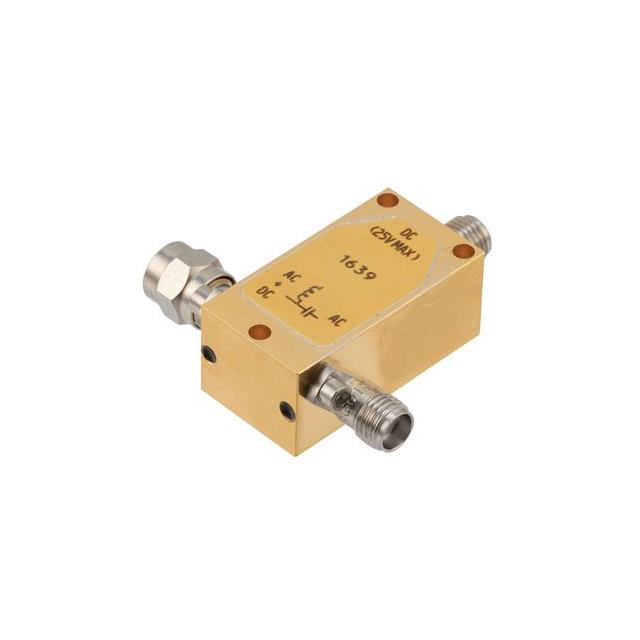
The Pasternack PE1639 is a broadband bias tee designed for signal conditioning applications. It operates within a frequency range of 50 kHz to 26 GHz and features an SMA male input connector. The device is rated for a maximum voltage of 25 volts and a maximum current of 750 mA. Insertion loss varies between 1.4 dB and 3 dB across the operational bandwidth. This three-port network allows for the adjustment of DC bias points in electrical components without affecting RF signals.
Verify the specific datasheet version when ordering, as manufacturer specifications may be updated. Confirm that the SMA male input configuration matches your system requirements. Ensure the 25 V and 750 mA ratings are sufficient for your intended DC bias application. Check lead times with authorized distributors, as they can vary significantly based on stock levels and manufacturing schedules.
Select the PE1639 when a wideband frequency response up to 26 GHz is required for biasing applications. Consider the insertion loss range of 1.4 to 3 dB when evaluating signal integrity impact. Ensure compatibility with SMA connectors on both the RF and DC ports if applicable. Verify that the voltage and current limits meet the specific needs of the component being biased.
The PE1639 belongs to Pasternack's line of signal conditioning components, specifically bias tees. These devices are essential for integrating DC power into RF circuits without disrupting high-frequency signal transmission. Unlike passive adapters, bias tees actively manage the separation and combination of DC and RF energy, making them critical in complex RF systems requiring precise bias control.
The PE1639 is rated for a maximum voltage of 25 volts.
No, the PE1639 is designed to adjust the DC bias point without affecting other components or the RF signal path.
 PE1639
The activity of extra discounts on wholesale prices is in full swing…
Please fill in your contact information and we will send you the latest wholesale price list.