 ChipApex | Global Electronic Components Supplier
SEARCH
Search Product
Search Post
— IC芯片 | 连接器 | 传感器 | 被动器件 —
Search productSearch post
— IC芯片 | 连接器 | 传感器 | 被动器件 —
Consult the customer manager about the wholesale price.
consultation hotline:86-132-6715-2157
email:[email protected]
Contact the product manager for consultation. One-stop consultation is available.
Do you want a lower wholesale price? Please send us your inquiry and we will reply immediately.
The PE64906B-Z is a digitally tunable capacitor (DTC) from pSemi, utilizing UltraCMOS and DuNE technology. It operates within a frequency range of 100 MHz to 3 GHz. The device provides a capacitance range of 0.9 pF to 4.6 pF with a minimum Q factor of 40. It features an SPI-compatible serial interface and supports a DC voltage rating of 2.75 VDC. The component is housed in a 10-QFN package measuring 2 mm x 2 mm with a height of 0.55 mm. It functions reliably between -40°C and +85°C.
Verify the specific suffix 'B' against official pSemi documentation to confirm exact pinout and electrical specifications, as variations may exist within the family. Ensure compatibility with the target system's SPI protocol and voltage levels. Cross-reference the RoHS status details provided by the manufacturer. Confirm that the 10-QFN footprint matches the PCB design requirements. Validate the operating temperature range against environmental constraints.
Select this component when a compact, digitally controlled variable capacitor is required for RF signal path adjustment. The choice is driven by the need for precise capacitance control without mechanical parts. Consider the low profile and small footprint for space-constrained designs. Evaluate the integration of bias generation and ESD protection as key differentiators. Assess the suitability for applications requiring rapid tuning speeds and high reliability.
This part belongs to pSemi's UltraCMOS product family, which leverages advanced CMOS processes for RF applications. The DuNE technology enhances performance metrics such as linearity and power handling. It serves as a modern replacement for traditional varactors or MEMS capacitors in wireless communication systems. The series emphasizes digital control interfaces for ease of integration into microcontroller-based designs.
The PE64908MLAA-Z is identified as a discontinued alternative, with the PE64906B-Z listed as a similar substitute. Verify functional equivalence regarding pinout and electrical parameters before substitution. Ensure that any replacement maintains compatibility with the existing SPI interface and physical mounting constraints.
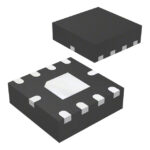 PE64906B-Z
The activity of extra discounts on wholesale prices is in full swing…
Please fill in your contact information and we will send you the latest wholesale price list.





