ChipApex | Global Electronic Components Supplier
SEARCH
Search Product
Search Post
— IC芯片 | 连接器 | 传感器 | 被动器件 —
Search productSearch post
— IC芯片 | 连接器 | 传感器 | 被动器件 —
Consult the customer manager about the wholesale price.
consultation hotline:86-132-6715-2157
email:[email protected]
Contact the product manager for consultation. One-stop consultation is available.
Do you want a lower wholesale price? Please send us your inquiry and we will reply immediately.
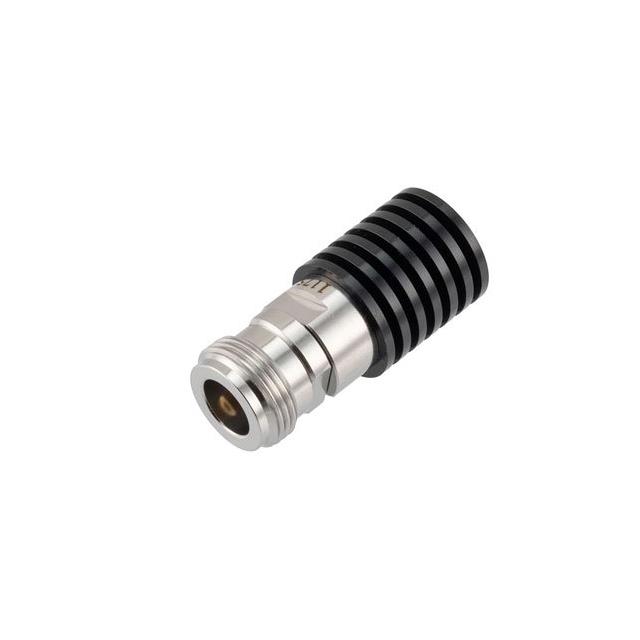
The PE6TR1175 is a coaxial RF terminator manufactured by Pasternack, designed for high-frequency signal termination applications. It features an N-Type female input connector and a brass body construction. The component operates within a frequency range of DC to 18 GHz and supports a power handling capacity of 5 Watts. It maintains a standard 50-ohm impedance characteristic, ensuring minimal signal reflection in RF circuits. This device belongs to the Coaxial RF Terminations series and is intended for use in test and measurement environments requiring reliable load performance at microwave frequencies.
Verify the specific connector gender and body material against project requirements before ordering. Confirm that the 5-watt power rating and 18 GHz frequency limit align with operational parameters. Check for RoHS compliance status if environmental regulations apply. Ensure the N-Type female interface matches existing cabling infrastructure. Review manufacturer documentation for storage and handling guidelines to maintain component integrity.
Select this model when a robust 5-watt load is required up to 18 GHz. The N-Type interface suits applications needing secure, threaded connections. Brass construction offers cost-effective durability compared to stainless steel alternatives. Consider the physical size and weight constraints of the installation space. Evaluate thermal dissipation needs relative to continuous duty cycles in the target environment.
This component is part of Pasternack's Coaxial RF Terminations series, which provides standardized loads for various connector types. The PE6TR1175 specifically addresses the need for mid-power termination in N-Type systems. It complements other terminators in the lineup that offer different power ratings or frequency ranges. The product is categorized under RF Interconnects and serves as a passive component for signal absorption.
Check for direct substitutes from Pasternack with identical N-Type female interfaces and 5-watt ratings. Verify compatibility with existing mounting hardware and cable assemblies. Ensure replacement units meet the same 18 GHz frequency specification. Confirm that alternative models do not require adapter usage, which could introduce insertion loss.
 PE6TR1175
The activity of extra discounts on wholesale prices is in full swing…
Please fill in your contact information and we will send you the latest wholesale price list.