ChipApex | Global Electronic Components Supplier
SEARCH
Search Product
Search Post
— IC芯片 | 连接器 | 传感器 | 被动器件 —
Search productSearch post
— IC芯片 | 连接器 | 传感器 | 被动器件 —
Consult the customer manager about the wholesale price.
consultation hotline:86-132-6715-2157
email:[email protected]
Contact the product manager for consultation. One-stop consultation is available.
Do you want a lower wholesale price? Please send us your inquiry and we will reply immediately.
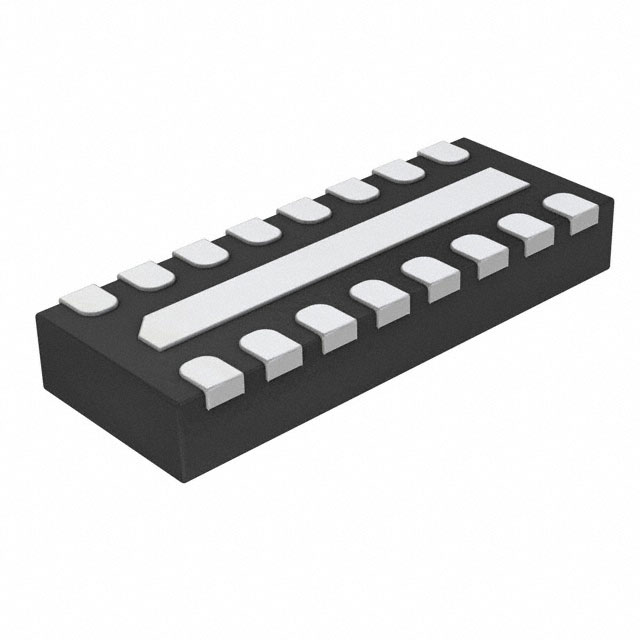
The PEMI8QFN/RG,132 is an eight-channel RC (Pi) EMI filter manufactured by NXP USA Inc. It features a second-order low-pass configuration with integrated resistors of 100 Ohms and capacitors totaling 11 pF per channel. The component utilizes a 16-XFDFN package with an exposed pad for surface-mount installation. Designed for high-frequency noise suppression, it provides significant attenuation, achieving 15 dB at 800 MHz. This device supports efficient PCB layout optimization while maintaining signal integrity in sensitive electronic applications.
Verify the exact suffix RG against official Nexperia/NXP documentation to confirm resistor and capacitor values. Ensure the XFDFN-16 footprint matches your PCB design constraints. Confirm RoHS compliance status through current datasheets as manufacturing processes may evolve. Cross-reference the part number with authorized distributors to avoid counterfeit components.
Select this component when multiple channels require identical low-pass filtering characteristics. The integrated RC structure reduces external component count compared to discrete solutions. Consider the thermal performance of the exposed pad if operating near temperature limits. Evaluate insertion loss requirements against the specified 15 dB attenuation at 800 MHz to ensure adequate EMI suppression for your specific application bandwidth.
This part belongs to the PEMI series of multi-channel EMI filters from NXP Semiconductors (formerly Freescale). These devices are designed to replace discrete LC or RC networks, saving board space and assembly time. The QFN variant offers improved thermal dissipation and electrical performance over traditional packages, making it suitable for modern compact consumer electronics and industrial control systems requiring robust noise immunity.
Check for direct substitutes within the PEMI family with different resistance or capacitance values. Verify pin compatibility with alternative manufacturers offering similar XFDFN-16 EMI filters. Ensure that any replacement maintains the same second-order low-pass response and attenuation characteristics at target frequencies.
 PEMI8QFN/RG,132
The activity of extra discounts on wholesale prices is in full swing…
Please fill in your contact information and we will send you the latest wholesale price list.