ChipApex | Global Electronic Components Supplier
SEARCH
Search Product
Search Post
— IC芯片 | 连接器 | 传感器 | 被动器件 —
Search productSearch post
— IC芯片 | 连接器 | 传感器 | 被动器件 —
Consult the customer manager about the wholesale price.
consultation hotline:86-132-6715-2157
email:[email protected]
Contact the product manager for consultation. One-stop consultation is available.
Do you want a lower wholesale price? Please send us your inquiry and we will reply immediately.
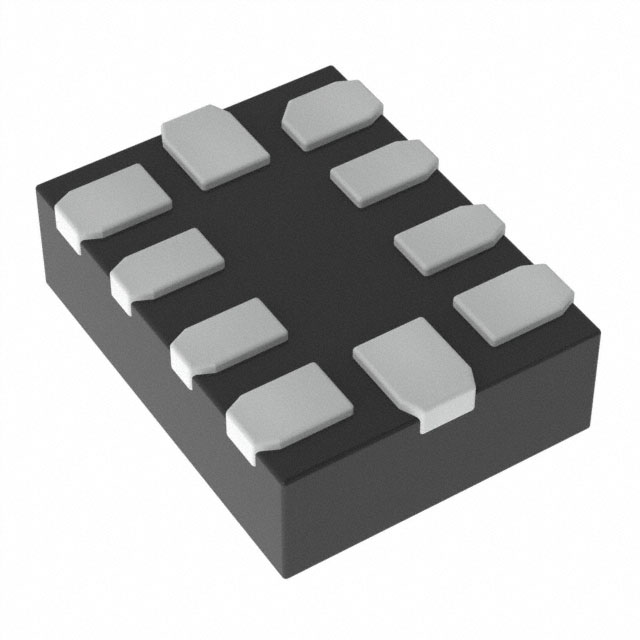
The PI3USB4000D is a differential bi-directional 2:1 multiplexer/demultiplexer switch designed for USB 2.0 signal routing. It features ultra-high voltage tolerance, with C0+/C0- pins supporting up to 24V and Lx+/- pins tolerating 6V. The device includes over-voltage protection (OVP) that triggers at 4.75V to disconnect channels during fault conditions. Electrical specifications include a typical on-resistance of 5Ω, bandwidth of 1GHz, and propagation delay of 0.25ns. It operates on a supply voltage range of 2.7V to 5.5V with a typical current consumption of 35µA. The component is housed in a 10-pin UQFN package measuring 1.5x2mm.
Verify the ordering code matches the required package configuration. Confirm that the specific suffix indicates tape and reel packaging if automated assembly is planned. Ensure the procurement channel is authorized to guarantee product authenticity and compliance with RoHS standards. Check for any automotive qualification requirements if the application demands AEC-Q100 certification.
Select this component when high voltage tolerance on the common port is required for charging protection. Verify that the control logic voltage levels are compatible with the system's 1.8V or 3.3V logic. Consider the 1.5x2mm package size for space-constrained designs. Ensure the application does not exceed the maximum analog voltage range of 5.5V on the I/O pins.
This part belongs to Diodes Incorporated's PI3USB series of USB switch ICs. It is specifically engineered for applications requiring robust protection against high-voltage transients while maintaining signal integrity for high-speed data lines. The device complements other USB mux/demux solutions by offering unique voltage tolerance capabilities.
Direct replacements must match the 2:1 differential mux topology and 24V C0+/- tolerance. Verify pin compatibility with the 10-pin UQZN package. Check if alternative parts offer similar OVP trigger voltages and bandwidth specifications.
The OVP triggers at a typical voltage of 4.75V on the C0+/- pins, disconnecting the channels to protect downstream components.
Yes, it supports a bandwidth of 1GHz, which is sufficient for USB 2.0 High Speed (480Mbps) signals while maintaining an open eye diagram.
The Lx+/- pins have a maximum voltage tolerance of 6V.
 PI3USB4000D
The activity of extra discounts on wholesale prices is in full swing…
Please fill in your contact information and we will send you the latest wholesale price list.