 ChipApex | Global Electronic Components Supplier
SEARCH
Search Product
Search Post
— IC芯片 | 连接器 | 传感器 | 被动器件 —
Search productSearch post
— IC芯片 | 连接器 | 传感器 | 被动器件 —
Consult the customer manager about the wholesale price.
consultation hotline:86-132-6715-2157
email:[email protected]
Contact the product manager for consultation. One-stop consultation is available.
Do you want a lower wholesale price? Please send us your inquiry and we will reply immediately.
The PI6C20800BAEX is a PCIe 3.0 compliant, high-speed, low-noise differential clock buffer manufactured by Diodes Incorporated. Designed as a companion to PCI Express 3.0 clock generators for Intel server chipsets, it distributes the differential SRC clock to eight differential pairs of HCSL outputs. The device supports both PLL and fanout operations, with an input frequency range up to 400 MHz in bypass mode. It operates on a single 3.3V supply (3.135V to 3.465V) within the commercial temperature range of 0°C to 70°C. Key electrical characteristics include output-to-output skew less than 50ps and cycle-to-cycle jitter under 60ps.
Verify that the specific ordering suffix matches the required package and temperature grade. The 'E' suffix indicates lead-free and green packaging compliance. Confirm the 'X' suffix corresponds to tape and reel packaging if automated assembly is planned. Ensure the component meets RoHS 2 and RoHS 3 directives for the target market.
Select the PI6C20800BAEX for commercial temperature applications (0°C to 70°C). For industrial temperature requirements (-40°C to 85°C), choose the PI6C20800BIAEX variant instead. Verify that the system design accommodates the 48-pin TSSOP package dimensions. Ensure the input clock source is compatible with the HCSL input specification and that the load termination matches the recommended board target impedance.
This component belongs to the PI6C20800B series of PCIe clock buffers. It serves as a direct replacement for legacy clock distribution solutions in PCIe 3.0 architectures. The device integrates SMBus capabilities for advanced power management and output control, distinguishing it from basic fanout buffers. It is part of Diodes Incorporated's portfolio of high-speed timing solutions for server and storage applications.
The PI6C20800BIAEX is the industrial temperature version of this component. Direct pin-compatible alternatives within the same family should be verified against specific temperature and jitter requirements before substitution.
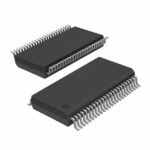 PI6C20800BAEX
The activity of extra discounts on wholesale prices is in full swing…
Please fill in your contact information and we will send you the latest wholesale price list.






