 ChipApex | Global Electronic Components Supplier
SEARCH
Search Product
Search Post
— IC芯片 | 连接器 | 传感器 | 被动器件 —
Search productSearch post
— IC芯片 | 连接器 | 传感器 | 被动器件 —
Consult the customer manager about the wholesale price.
consultation hotline:86-132-6715-2157
email:[email protected]
Contact the product manager for consultation. One-stop consultation is available.
Do you want a lower wholesale price? Please send us your inquiry and we will reply immediately.
The PI6ULS5V9627AQEX is a CMOS integrated circuit designed for Fast-mode Plus (Fm+) I2C-bus or SMBus applications. It provides bidirectional buffering and voltage level translation between Port A (0.6V to 5.5V) and Port B (2.2V to 5.5V). The device supports up to 4000 pF bus capacitance at lower speeds and isolates two halves of a bus for both voltage and capacitance. It features open-drain inputs/outputs, powered-off high-impedance pins, and ESD protection exceeding 8000V HBM. Operating temperatures range from -40°C to +85°C.
Verify the ordering suffix 'Q' corresponds to the QSOP-16L package configuration as specified in the manufacturer's documentation. Confirm that the component meets RoHS3 compliance requirements if applicable to your manufacturing process. Ensure proper handling procedures are followed due to the sensitivity of the CMOS technology used in this interface IC.
Select this component when designing systems that require isolation between different voltage domains on an I2C or SMBus network. Consider the specific capacitance limits and propagation delays when determining the maximum allowable bus speed. Evaluate the need for active HIGH repeater enable inputs to manage bus arbitration and clock stretching effectively across multiple masters.
This part belongs to the PI6ULS5 series of signal buffers and repeaters manufactured by Diodes Incorporated. It is specifically engineered for interface ICs requiring robust voltage translation capabilities. The device complements other components in mixed-voltage environments where standard logic levels cannot directly communicate without potential damage or data corruption.
PI6ULS5V9627AZYEX
Port A operates from 0.6V to 5.5V, accommodating lower voltage logic swings, while Port B operates from 2.2V to 5.5V and includes a static offset level.
The I2C-bus pins remain in a high-impedance state when the PI6ULS5V9627A is unpowered, preventing interference with other devices on the bus.
Yes, multiple devices can be connected in series provided that Port A is connected to Port B, though the number of devices is limited by repeater delay considerations.
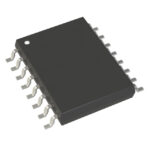 PI6ULS5V9627AQEX
The activity of extra discounts on wholesale prices is in full swing…
Please fill in your contact information and we will send you the latest wholesale price list.





