ChipApex | Global Electronic Components Supplier

SEARCH
Search Product
Search Post
— IC芯片 | 连接器 | 传感器 | 被动器件 —
Search productSearch post
— IC芯片 | 连接器 | 传感器 | 被动器件 —
Consult the customer manager about the wholesale price.
consultation hotline:86-132-6715-2157
email:[email protected]
Contact the product manager for consultation. One-stop consultation is available.
Do you want a lower wholesale price? Please send us your inquiry and we will reply immediately.
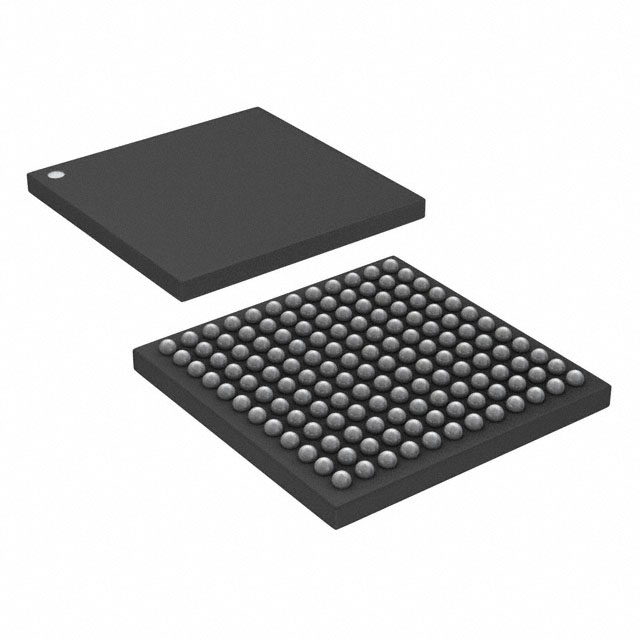
PIC32MZ1024EFM144-E/JWX is listed in the Microcontrollers range at ChipApex. The manufacturer field lists Microchip Technology. Its product description is IC MCU 32BIT 1MB FLASH 144TFBGA. Review the specifications below when checking this part for your BOM.
The PIC32MZ1024EFM144-E/JWX is a 32-bit microcontroller from the PIC32MZ Embedded Connectivity with Floating Point Unit (EF) family. It features a MIPS32 M-Class core operating up to 252 MHz, equipped with a hardware floating-point unit and memory management unit. The device integrates 1 MB of Live-Update Flash program memory and 512 KB of SRAM data RAM. It utilizes a TFBGA-144 package and supports an operating voltage range of 2.1 V to 3.6 V across industrial temperature ranges.
Verify silicon revision B3 compatibility when sourcing this component. Review Microchip errata document DS80000663 for specific workarounds regarding oscillator configurations, USB functionality, and peripheral clock settings. Ensure design implementation accounts for documented silicon anomalies affecting I2C reliability and ADC performance under low-voltage conditions.
Select this part for designs requiring significant on-chip memory and high-speed processing within a compact TFBGA package. Consider the 252 MHz maximum frequency and FPU availability for complex algorithm execution. Evaluate the 144-pin count against available GPIO requirements and peripheral needs such as Ethernet or HS USB connectivity.
This device belongs to the PIC32MZ EF family, which emphasizes embedded connectivity and multimedia capabilities. It shares architectural similarities with other PIC32MZ variants but offers specific memory sizes and pin counts. The EF designation indicates the inclusion of the floating-point unit and enhanced connectivity features compared to standard PIC32MZ models.
PIC32MZ1024EFG144-E/JWX
No, the USB module does not support remote wakeup through the USBRIE bit. USB descriptors must inform the host that the device does not support this feature.
Turbo mode is not functional when two channels are linked for the purpose of increasing throughput.
No, a crystal oscillator cannot be used as the input to the Secondary Oscillator pins. An external clock source or the internal LPRC should be used instead.
Explore related parts through Embedded, Integrated Circuits (ICs), all product categories, ChipApex homepage.
 PIC32MZ1024EFM144-E/JWX

The activity of extra discounts on wholesale prices is in full swing…
Please fill in your contact information and we will send you the latest wholesale price list.