ChipApex | Global Electronic Components Supplier
SEARCH
Search Product
Search Post
— IC芯片 | 连接器 | 传感器 | 被动器件 —
Search productSearch post
— IC芯片 | 连接器 | 传感器 | 被动器件 —
Consult the customer manager about the wholesale price.
consultation hotline:86-132-6715-2157
email:[email protected]
Contact the product manager for consultation. One-stop consultation is available.
Do you want a lower wholesale price? Please send us your inquiry and we will reply immediately.
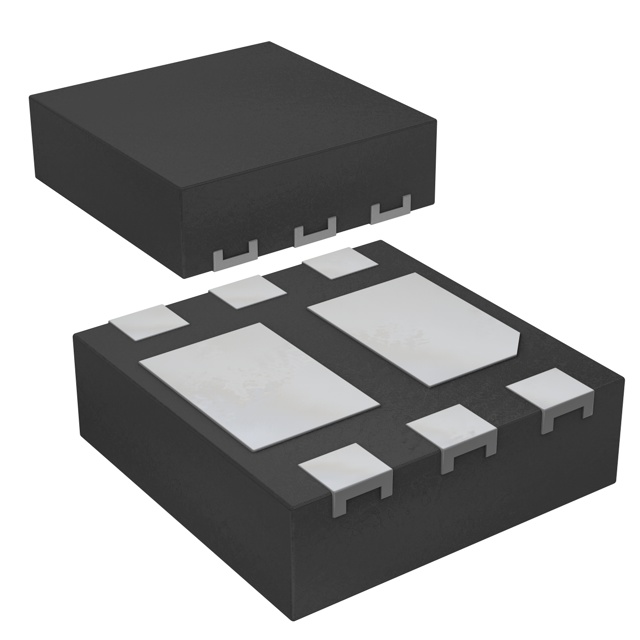
The PIMP31PAX is a PNP/PNP Resistor-Equipped double Transistor (RET) manufactured by Nexperia, housed in a DFN2020-6 (SOT1118) leadless surface-mounted package. It features built-in bias resistors with R1 = 1 kΩ and R2 = 10 kΩ. The device supports a collector-emitter voltage of -50 V and an output current of -500 mA per transistor. Key electrical characteristics include a DC current gain (hFE) of 70 at -50 mA, a transition frequency (fT) of 150 MHz, and a collector-base cut-off current of -100 nA. The junction temperature range extends from -55 °C to 150 °C.
Verify the specific ordering suffix 'X' against official Nexperia documentation to confirm packaging details such as reel or cut tape specifications. Ensure the procurement channel sources directly from authorized distributors to guarantee product authenticity and traceability. Confirm that the delivered components match the DFN2020-6 package outline and marking code '8G' specified in the datasheet.
Select this component when a dual PNP configuration with fixed bias resistors is required for space-constrained designs. Compare the 500 mA current rating and 50 V voltage limits against application requirements. Consider the SOT1118 package dimensions for PCB layout compatibility. Evaluate thermal resistance values based on the intended PCB copper area and layer configuration to ensure adequate heat dissipation.
The PIMP31PA belongs to Nexperia's family of Resistor-Equipped Transistors (RETs). Complementary variants include the NPN/NPN type PIMN31PA and the NPN/PNP type PIMC31PA. These devices share similar performance profiles but differ in transistor polarity configurations, allowing designers to choose the appropriate type for specific circuit topologies while maintaining consistent packaging and integration benefits.
Direct functional substitutes within the same RET family include PIMN31PA for NPN/NPN configurations and PIMC31PA for NPN/PNP combinations. Verify pinout compatibility and electrical parameters before substituting with general-purpose discrete transistors, as external resistor networks will be required in those cases.
 PIMP31PAX
The activity of extra discounts on wholesale prices is in full swing…
Please fill in your contact information and we will send you the latest wholesale price list.