 ChipApex | Global Electronic Components Supplier
SEARCH
Search Product
Search Post
— IC芯片 | 连接器 | 传感器 | 被动器件 —
Search productSearch post
— IC芯片 | 连接器 | 传感器 | 被动器件 —
Consult the customer manager about the wholesale price.
consultation hotline:86-132-6715-2157
email:[email protected]
Contact the product manager for consultation. One-stop consultation is available.
Do you want a lower wholesale price? Please send us your inquiry and we will reply immediately.
The PM6675TR is a dual-output power management IC from STMicroelectronics, integrating a high-efficiency step-down switching controller and an independent Low Drop-Out (LDO) linear regulator. It operates within a 4.5 V to 28 V input voltage range and features Constant On-Time (COT) architecture for fast transient response. The switching section supports adjustable output voltages from 0.6 V to 3.3 V with selectable current limits of ±1 A or ±2 A. The LDO also provides an adjustable 0.6 V to 3.3 V output. Packaged in a 24-VFQFPN (4x4 mm) surface-mount format, it includes dedicated power-good signals and soft-start/soft-end functions.
Verify component authenticity through authorized channels as the PM6675TR is listed as obsolete by the manufacturer. Confirm that the 24-VFQFPN package dimensions match your PCB footprint requirements. Ensure compatibility with the specified 4.5 V to 28 V input range for your target application. Check for RoHS3 compliance status if environmental regulations apply to your production line.
Select this device when a combined solution for high-efficiency switching and low-noise linear regulation is required. The COT architecture allows support for both electrolytic and ceramic output capacitors, simplifying design. Consider the 33 kHz mode for audio applications to avoid audible noise. Verify that the integrated current limits meet the load requirements without external sensing components.
The PM6675 belongs to STMicroelectronics' PMIC portfolio, designed for compact power management solutions. It utilizes a 24-pin VFQFPN package suitable for space-constrained designs. The device integrates protection features including overvoltage and undervoltage latching. It is part of a series offering configurable power stages for various industrial and consumer electronics applications.
The PM6675TR is marked as obsolete. Consult official replacement guides for compatible successors within the PM66xx series. Verify pinout compatibility before substituting with newer models. Ensure that alternative devices support similar input voltage ranges and output configurations.
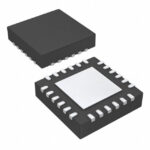 PM6675TR
The activity of extra discounts on wholesale prices is in full swing…
Please fill in your contact information and we will send you the latest wholesale price list.





