ChipApex | Global Electronic Components Supplier
SEARCH
Search Product
Search Post
— IC芯片 | 连接器 | 传感器 | 被动器件 —
Search productSearch post
— IC芯片 | 连接器 | 传感器 | 被动器件 —
Consult the customer manager about the wholesale price.
consultation hotline:86-132-6715-2157
email:[email protected]
Contact the product manager for consultation. One-stop consultation is available.
Do you want a lower wholesale price? Please send us your inquiry and we will reply immediately.
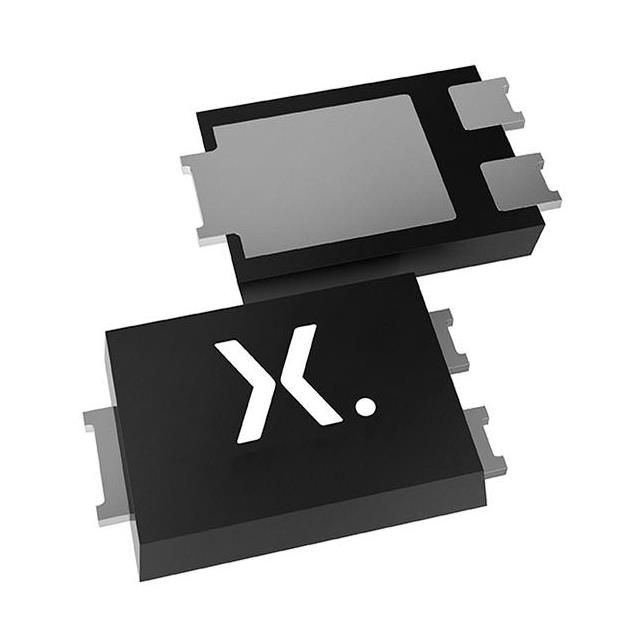
The Nexperia PNE200100CPE is a dual common cathode hyperfast recovery rectifier featuring high power density and planar technology. It operates with a reverse voltage of 200 V and an average forward current of 5 A per diode. The device exhibits a maximum reverse recovery time of 30 ns, enabling efficient hyperfast switching. Encapsulated in the CFP15B (SOT1289B) surface-mount package, it utilizes clip-bond technology for enhanced power capability and low inductance.
Verify the specific ordering suffix to confirm packaging configuration, as standard data sheets may not detail tape-and-reel variations. Confirm thermal management requirements against the specified junction-to-ambient resistance values for your PCB footprint. Ensure compatibility with the CFP15B soldering stencil design to prevent assembly defects.
Select this component for designs requiring rapid switching speeds and compact form factors. Evaluate the thermal resistance characteristics relative to your ambient temperature constraints. Consider the 200 V reverse voltage rating for appropriate safety margins in DC link or rectifier stages. Verify that the 5 A current rating aligns with peak load demands.
This device belongs to Nexperia's hyperfast recovery rectifier portfolio, designed for high-efficiency power conversion. It addresses the industry demand for reduced switching losses and smaller passive components in modern power electronics. The common cathode configuration simplifies bridgeless PFC and synchronous rectifier topologies.
Consult official Nexperia substitution guides for verified equivalents. Cross-reference pinout compatibility and thermal specifications when considering alternative manufacturers' parts.
The maximum reverse recovery time (trr) is specified as 30 ns under step recovery test conditions.
The device contains two independent diodes arranged in a common cathode configuration within a single CFP15B package.
The rectifier utilizes clip-bond technology combined with a planar die design to achieve high power capability and low inductance.
 PNE200100CPEZ
The activity of extra discounts on wholesale prices is in full swing…
Please fill in your contact information and we will send you the latest wholesale price list.