 ChipApex | Global Electronic Components Supplier

SEARCH
Search Product
Search Post
— IC芯片 | 连接器 | 传感器 | 被动器件 —
Search productSearch post
— IC芯片 | 连接器 | 传感器 | 被动器件 —
Consult the customer manager about the wholesale price.
consultation hotline:86-132-6715-2157
email:[email protected]
Contact the product manager for consultation. One-stop consultation is available.
Do you want a lower wholesale price? Please send us your inquiry and we will reply immediately.
The PS2501A-1-A is a single-channel transistor output optoisolator from the NEPOC series by Renesas Electronics Corporation. It features a 5000Vrms isolation voltage and operates within a temperature range of -55°C to 100°C. The device utilizes a DC input with a typical forward voltage of 1.17V and a maximum DC forward current of 80mA. The NPN phototransistor output supports a maximum collector-emitter voltage of 80V, a collector current of 50mA, and a saturation voltage of 300mV. Current transfer ratios range from 80% to 600% at 5mA input. Typical rise and fall times are 3µs and 5µs, respectively. It is housed in a 4-DIP (0.300", 7.62mm) package.
Verify component authenticity through authorized Renesas distributors or certified suppliers. Confirm the specific suffix matches the required package and tape/reel specifications. Check for recent Product Change Notifications regarding label updates or manufacturing site changes. Ensure compliance with RoHS directives if applicable to your region. Validate that the part status aligns with long-term availability requirements for your production cycle.
Select this component when a single channel with high isolation voltage is required. Compare the 80V output rating against load requirements. Consider the 4-DIP package for through-hole mounting needs. Evaluate the current transfer ratio range to ensure sufficient gain for the application logic levels. Verify thermal management capabilities within the specified operating temperature range.
This part belongs to the PS2501 family of high-isolation voltage photocouplers. It shares functional similarities with the PS2501-1-A but differs in packaging and specific electrical characteristics such as forward current limits. The NEPOC series designation indicates its classification within Renesas' portfolio of standard optocoupler products designed for general-purpose isolation tasks.
The PS2501-1-A is a related variant offering similar functionality in a PDIP package. Verify pinout compatibility and electrical parameter overlaps before substitution. Other manufacturers may offer equivalent parts, but direct pin-for-pin replacements require careful verification of isolation ratings and package dimensions.
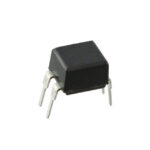 PS2501A-1-A

The activity of extra discounts on wholesale prices is in full swing…
Please fill in your contact information and we will send you the latest wholesale price list.






