ChipApex | Global Electronic Components Supplier

SEARCH
Search Product
Search Post
— IC芯片 | 连接器 | 传感器 | 被动器件 —
Search productSearch post
— IC芯片 | 连接器 | 传感器 | 被动器件 —
Consult the customer manager about the wholesale price.
consultation hotline:86-132-6715-2157
email:[email protected]
Contact the product manager for consultation. One-stop consultation is available.
Do you want a lower wholesale price? Please send us your inquiry and we will reply immediately.
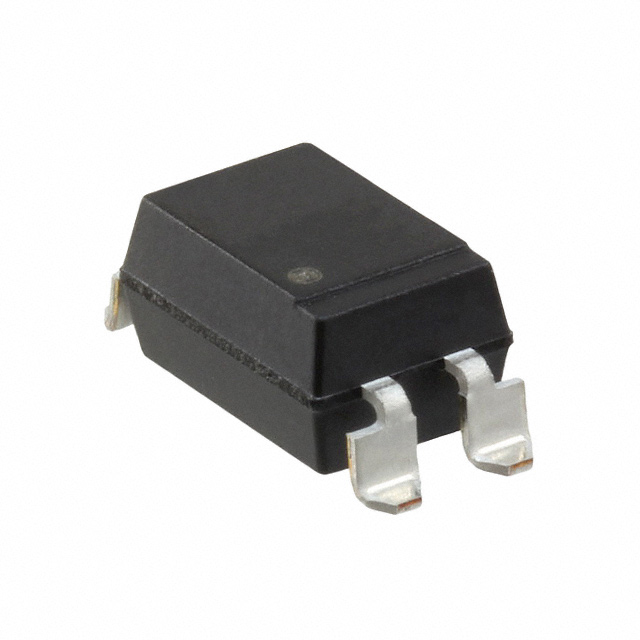
The PS2501L-1-F3-M-A is a single-channel optically coupled isolator manufactured by CEL. It integrates a Gallium Arsenide (GaAs) infrared light emitting diode with an NPN silicon phototransistor to provide electrical isolation. The device features a high isolation voltage rating of 5000 VRMS, ensuring robust signal transmission across isolated circuits. It utilizes a lead bending type gull-wing package designed for surface mount technology (SMT), facilitating automated assembly processes. The component operates within a temperature range of -55°C to +100°C and supports a maximum collector current of 50 mA.
Verify the specific suffix 'M' against official datasheets, as it may denote a specific tape-and-reel packaging variant or internal revision not always detailed in general summaries. Confirm RoHS compliance status through the manufacturer's latest documentation. Ensure the gull-wing package dimensions match your PCB footprint requirements precisely before ordering.
Select this component when a single-channel isolation solution with high voltage withstand capability is required for surface mount applications. The NPN output configuration suits standard logic interfacing needs. Consider the operating temperature range and forward current specifications to ensure compatibility with the driving circuitry and load requirements in the target design.
This part belongs to the PS2501 series of high-isolation voltage photocouplers from CEL. The series includes both DIP and SMT variants, with the 'L' designation typically indicating the lead-bending gull-wing package style. These components are widely used in applications demanding reliable electrical separation between low-voltage control circuits and higher-voltage power stages.
Direct substitutes include the PS2501L-1-E4-A and PS2501L-1-F3-A from the same manufacturer family. Cross-manufacturer equivalents should be verified for pinout compatibility, isolation voltage ratings, and CTR characteristics to ensure functional parity without redesigning the host circuit.
 PS2501L-1-F3-M-A

The activity of extra discounts on wholesale prices is in full swing…
Please fill in your contact information and we will send you the latest wholesale price list.