 ChipApex | Global Electronic Components Supplier

SEARCH
Search Product
Search Post
— IC芯片 | 连接器 | 传感器 | 被动器件 —
Search productSearch post
— IC芯片 | 连接器 | 传感器 | 被动器件 —
Consult the customer manager about the wholesale price.
consultation hotline:86-132-6715-2157
email:[email protected]
Contact the product manager for consultation. One-stop consultation is available.
Do you want a lower wholesale price? Please send us your inquiry and we will reply immediately.
The PS2501L-2 is a dual-channel transistor output optoisolator manufactured by California Eastern Laboratories (CEL). It integrates a Gallium Arsenide (GaAs) infrared emitting diode with two NPN silicon phototransistors in an 8-pin DIP package. The device provides high isolation voltage of 5000Vrms between input and output circuits. Key electrical parameters include a minimum collector-emitter breakdown voltage of 80V, a maximum forward current of 50mA, and a typical current transfer ratio ranging from 80% to 300% at a forward current of 5mA. It operates within a temperature range of -40°C to +100°C.
Verify the specific suffix (e.g., -A, -E3-A) as it indicates pin configuration or compliance status. Confirm availability status as some variants may be discontinued. Ensure the package type matches the PCB footprint requirements. Check RoHS compliance if required by project specifications. Validate supplier authenticity through authorized distribution channels.
Select this component when dual-channel isolation is required in a small form factor. Compare current transfer ratio specifications against load requirements. Ensure the isolation voltage rating exceeds the system's peak transient voltage. Verify operating temperature range compatibility with the application environment. Consider pinout compatibility with existing designs if replacing legacy parts.
This part belongs to the PS2501L series of high-isolation voltage photocouplers. It is functionally similar to NEC/Renesas PS2501L-2 but manufactured by CEL. The series is designed for general-purpose digital signal isolation. It competes with other dual-channel transistor output optocouplers in the market.
Direct replacements include Renesas PS2501L-2-A. Verify pinout compatibility before substitution. Check current transfer ratio and isolation voltage ratings to ensure equivalent performance. Confirm package dimensions match the existing PCB layout.
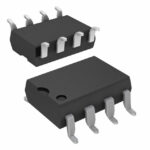 PS2501L-2

The activity of extra discounts on wholesale prices is in full swing…
Please fill in your contact information and we will send you the latest wholesale price list.






